
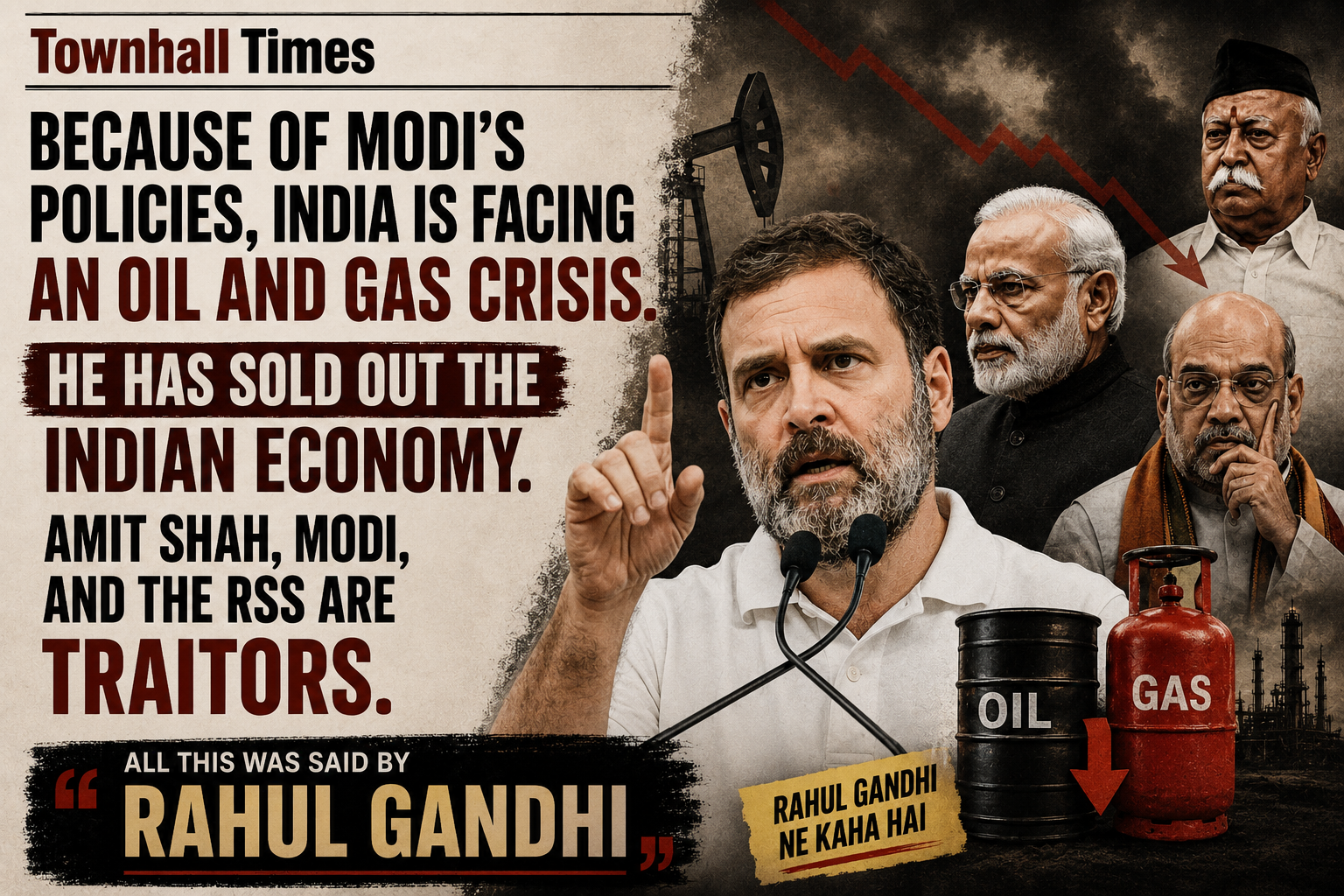
Townhall Times ,New Delhi, May 25, 2026 Rising global crude oil prices, geopolitical tensions in West Asia, and supply disruptions have once again pushed India into an energy crisis, increasing pressure on petrol, diesel, and LPG prices. As one of the world’s largest oil importers, India remains highly vulnerable to external shocks, and the latest surge in fuel costs is directly affecting transport, inflation, and household expenses. In several cities, fuel prices have climbed sharply, raising fresh concerns over the burden on ordinary citizens.
Opposition Attacks Government, Raises Questions Over Energy Sovereignty
The opposition has launched strong criticism against Prime Minister Narendra Modi’s government, arguing that India’s energy security has weakened under current policies. Congress leader Rahul Gandhi accused the Centre of limiting India’s strategic flexibility by not keeping wider options open for discounted crude imports from countries such as Russia and Iran.
Samajwadi Party chief Akhilesh Yadav also questioned whether India’s economic and trade decisions are increasingly being shaped by external pressure rather than domestic interests. Meanwhile, AAP leader Arvind Kejriwal demanded clarity from the government on whether diplomatic alignments have affected India’s oil import choices, while asking why ordinary citizens are being forced to bear the cost of rising fuel prices.
Global Crisis or Policy Miscalculation? Critics Point to Strategic Gaps
Critics argue that while the immediate trigger may be global conflict and instability in oil supply routes, India’s long-term energy planning also deserves scrutiny. They claim the government relied heavily on political messaging about strong diplomacy and self-reliance, but failed to create stronger insulation against sudden international shocks.
Opposition voices say that maintaining broader energy partnerships and reducing dependence on volatile routes could have softened the impact. The debate has now shifted toward whether this crisis is purely geopolitical or partly linked to policy gaps in managing energy security and economic resilience.
Rising Fuel Prices Hit Common Citizens, Pressure Mounts on Modi Government
The increase in fuel prices is expected to affect transportation, food costs, industrial production, and daily living expenses, particularly for lower- and middle-income households. As inflationary pressure grows, demands for fuel tax cuts, subsidy support, and a clearer long-term energy strategy are becoming louder.
For the Modi government, the challenge is no longer only about managing oil imports — it is also about restoring public confidence. With opposition parties intensifying their criticism, the central question remains: Is India facing only a geopolitical shock, or has the crisis exposed weaknesses in the government’s energy policy and preparedness?









Leave a Reply