
Townhall Times, New Delhi
Reporter: Bhavika Kalra
Washington, D.C. | Tuesday, February 24, 2026
By: Investigative Desk (International Trade & Policy)
The era of the “unilateral trade war” just hit a constitutional wall. In a move that has left the Department of Commerce scrambling and global markets in a state of cautious euphoria, the U.S. Supreme Court has ruled that the President can no longer use “national security” as a blank check to impose indefinite tariffs.
The ruling, which landed this morning, doesn’t just cancel specific taxes—it fundamentally redefines the balance of power between the White House and the Capitol.
The Death of the “Blank Check” Doctrine
For nearly a decade, administrations have leaned heavily on Section 232 of the Trade Expansion Act and the International Emergency Economic Powers Act (IEEPA). These laws were the “escape hatches” that allowed the President to bypass Congress and slap duties on everything from German cars to Chinese steel by simply declaring a national emergency.
The Court’s Hammer: The Justices ruled that while the President has the power to negotiate, the power to tax (which is what a tariff is) belongs strictly to Congress under Article I of the Constitution. The ruling states that any tariff lasting longer than a “temporary emergency period” (defined now as 180 days) requires a formal vote from Congress to remain in effect.
Immediate Chaos at the Ports
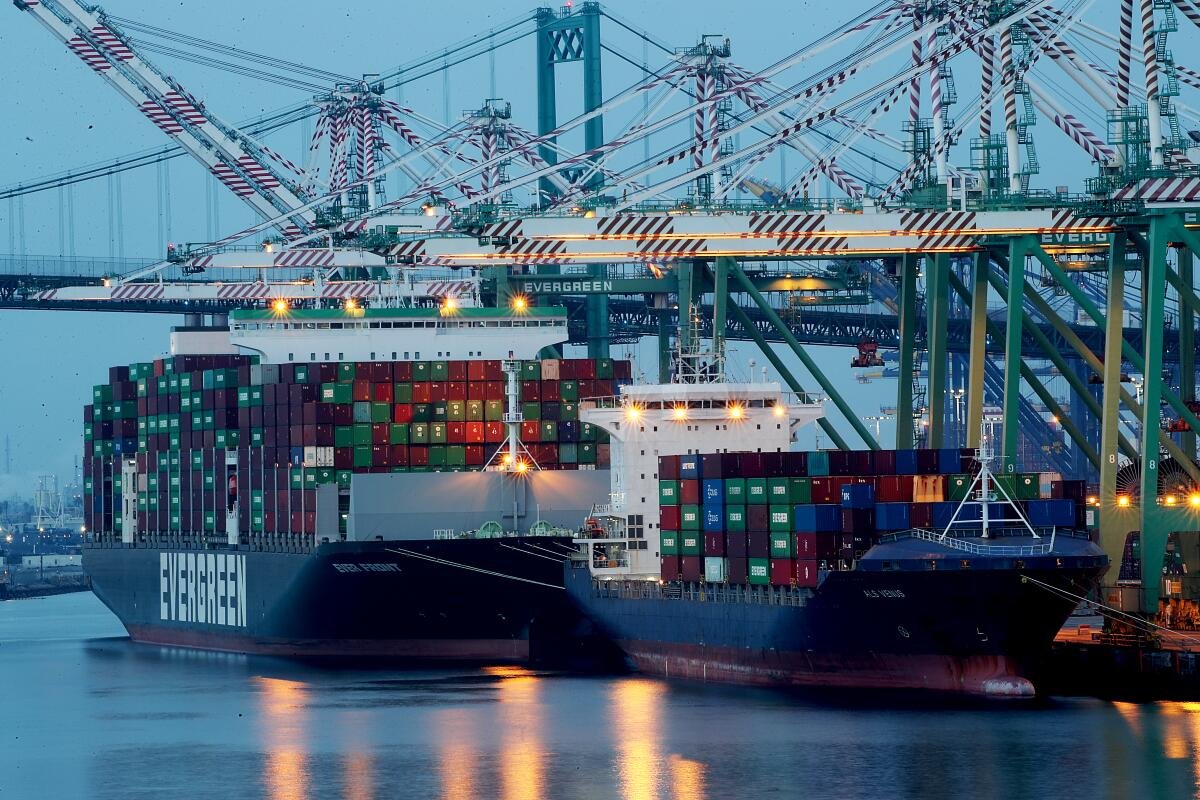
The impact was felt within minutes at Customs and Border Protection (CBP).
-
The “Halt” Order: The administration has been forced to pause the collection of several controversial “Section 301” duties.
-
The Refund Surge: Trade attorneys are already filing a mountain of paperwork demanding “Duty Drawbacks”—billions of dollars in refunds for tariffs collected under what the Court now calls “unauthorized executive overreach.”
Market Winners and Losers: A Zero-Sum Game
The economic ripples are massive and contradictory:
| Sector | Reaction | the Why |
| Big Tech & Retail | Surge | Giants like Apple and Walmart, who rely on global assembly, are looking at a potential massive drop in “landed costs.” |
| U.S. Steel & Aluminum | Slump | Domestic producers who have thrived under a protective 25% tariff wall are seeing their stocks take a hit as they prepare for a flood of cheaper imports. |
| Agriculture | Optimistic | Farmers in the Midwest are hoping this leads to a “de-escalation” of retaliatory tariffs on American soybeans and pork. |
The Geopolitical Chessboard
In Beijing, Brussels, and Tokyo, trade ministers are currently huddling with their legal teams. This ruling effectively takes away the U.S. President’s “biggest stick” in trade negotiations.
-
Weakened Leverage: If the President can’t guarantee a tariff will stay in place without a messy Congressional debate, U.S. bargaining power in bilateral talks is significantly weakened.
-
The Legislative Pivot: We are now likely to see a frantic “lame-duck” push in Congress to pass a new Trade Authority Act to prevent a total vacuum in trade enforcement.
The Constitutional “Re-set”
Beyond the money, this is a massive victory for the “Non-Delegation Doctrine.” The Court is signaling a broader trend: they are tired of federal agencies and the President making “law” through executive orders. By returning tariff power to Congress, they are forcing the legislative branch to actually do its job—taking the heat for unpopular tax decisions rather than hiding behind the President.
What Happens Tomorrow?
Expect a flurry of “stay” applications as the Department of Justice tries to prevent a total collapse of existing trade barriers. However, the signal is clear: the U.S. is moving away from the “Trade Warrior” model and back toward a more traditional, legislatively driven economic policy.









Leave a Reply