
Townhall Times, New Delhi
Reporter: Bhavika Kalra
By: Regional Crime Bureau | Meerut Tuesday, February 24, 2026
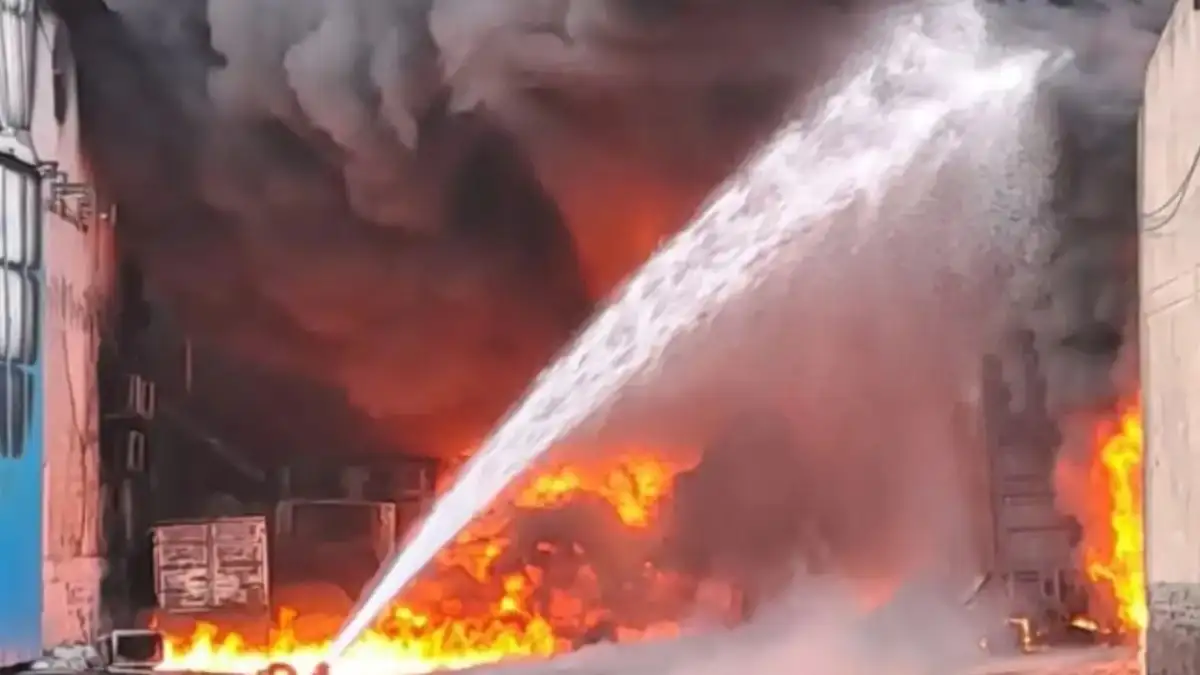
The soot hasn’t even settled on the walls of Gali Number 3, but the blame game has already begun. Late Monday night, what started as a flicker of a short circuit in a ground-floor tailoring unit turned into a funeral pyre for a family that never saw it coming.
By 8:49 PM, the air in the Kidwai Nagar area of Meerut was thick with the smell of burning polyester and the screams of a neighborhood realization: the house near Surahi Wali Masjid was going up, and people were still inside. When the fire was finally beaten back two hours later, the tally was devastating. Six dead. Five of them were children. Two were four-month-old infants who died in the arms of a 25-year-old woman who couldn’t find the exit through the smoke.
The “Choke Point” Theory
Forensic teams and fire marshals spent the early hours of Tuesday morning crawling through the charred remains. The working theory is as simple as it is tragic. This wasn’t just a house; it was a warehouse.
The ground floor was packed to the ceiling with reams of fabric—synthetic blends that don’t just burn; they melt and release toxic gases. When the spark hit—likely from a neglected electrical point overloaded by industrial sewing machines—the house didn’t just catch fire. It turned into a gas chamber.
Because the fabric was stored right at the entrance, the family on the upper floor found their only exit blocked by a wall of flame. The staircase acted as a chimney, funneling the black, acrid smoke upward. In a fire like this, you don’t die from the heat first; you die from the two breaths of toxic smoke that knock you unconscious before the flames even touch the room.
The Victims: A Generation Erased
The morgue at the local civil hospital tells a story that has left Meerut in a state of shock.
-
Rukhsar (25): The young woman of the house, who was found surrounded by the children.
-
The Children: Mahbish (12), and the four-year-olds, Hammad and Akdas.
-
The Twins: Nabia and Inayat. They were only four months old. They were the most vulnerable, their lungs unable to handle even a fraction of the carbon monoxide that filled the room.
Ameer Bano (55) is the only reason this isn’t a total wipeout of the household. She survived, but she’s currently in a critical care ward with lungs so badly scorched that doctors are hesitant to give a hopeful prognosis.
The “Last Mile” Failure
Senior Superintendent of Police (SSP) Avinash Pandey has been on-site since the first siren. The investigation is already looking at why it took so long for the fire tenders to get effective water pressure on the flames.
The answer lies in the geography of Lisadi Gate. The narrow, encroached lanes make it nearly impossible for a standard fire engine to navigate. Every minute the truck spent reversing and maneuvering through the tight corners was a minute the family didn’t have.
The Industrial Shadow
This tragedy shines a harsh light on Meerut’s “home-factory” culture. In Kidwai Nagar, hundreds of houses double as garment units. They run high-voltage machinery on domestic lines. They store tons of flammable fabric in living rooms. And they do it without a single fire extinguisher or a secondary exit.
Forensic experts are currently checking if the electrical meter was bypassed—a common practice that leads to the kind of catastrophic short circuits seen on Monday night.
Conclusion: A Neighborhood in Silence
As the bodies are moved for the final rites today, the rhythmic sound of sewing machines that usually defines Kidwai Nagar has stopped. The “Meerut Inferno” is more than just a news headline; it is a grim warning to every household in these congested hubs.
The final forensic report will eventually name a faulty wire or a heated motor as the cause. But for Gali Number 3, the real cause was a lethal mix of urban congestion and a lack of safety that no one bothered to enforce until the bodies started coming out.






Leave a Reply