
Townhall Times, New Delhi
Reporter: Bhavika Kalra
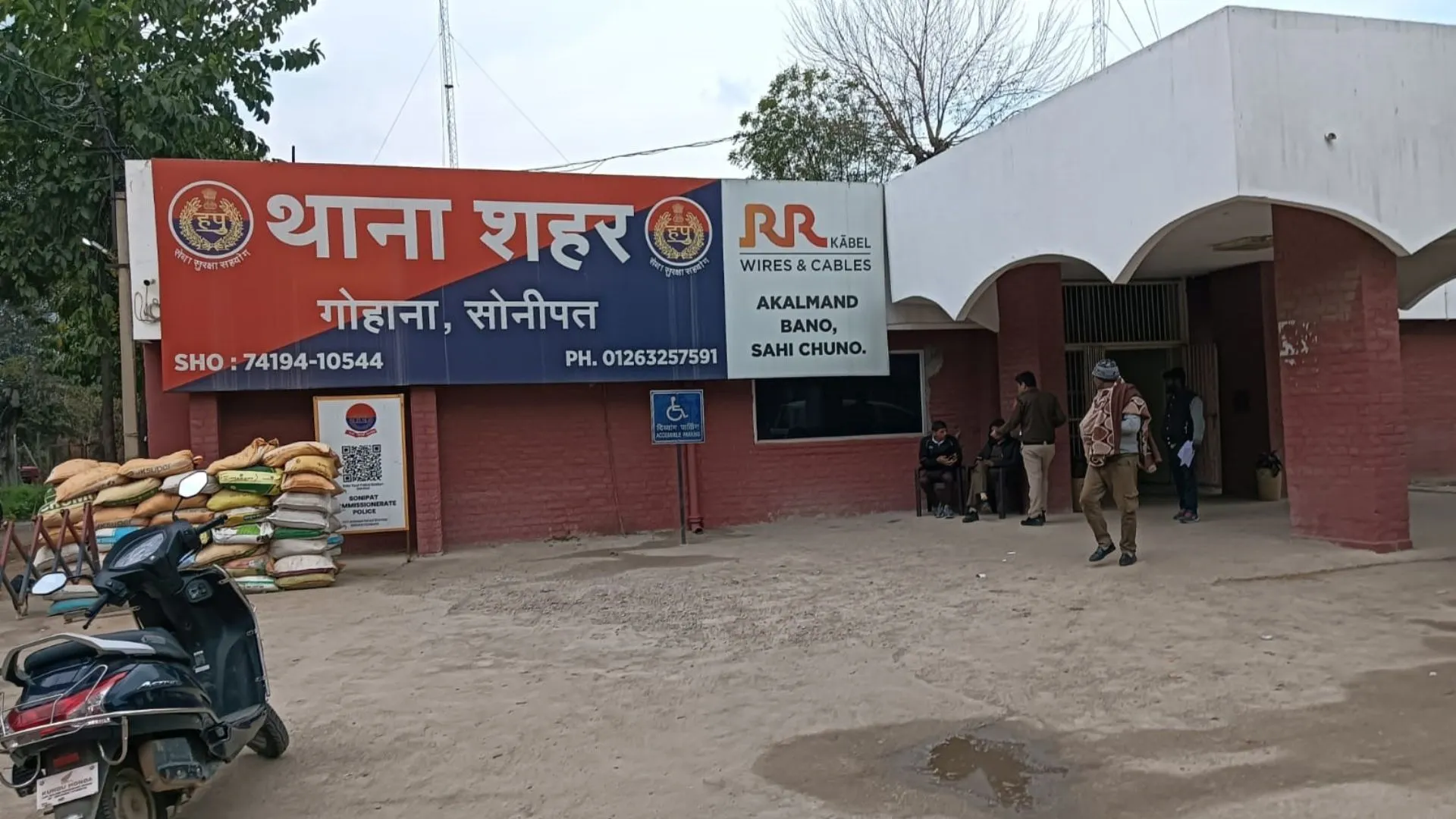
The quiet of a modest residential street in Sonipat was shattered early this morning by a sound that the police force usually associates with duty and defense. Instead, it was the sound of absolute, lonely despair. A 45-year-old Assistant Sub-Inspector (ASI) of the Haryana Police—a man who had spent more than half his life in the khaki uniform—was found dead in his home. He had used his own service weapon, the very tool issued to him by the state to protect the public, to end his own life.
By the time neighbors and family members reached the room, the veteran officer was already beyond the reach of any medical intervention. The hospital declaration was a mere formality, a clinical end to a life that had become a casualty of a system that rarely pauses to check on the mental health of its frontline soldiers. But the questions left behind in the wake of that 9mm round are anything but formal. They are haunting the corridors of the Sonipat police headquarters today.
The local police arrived at the residence within minutes, but the air was already heavy with the realization that they were investigating one of their own. The forensic team, usually working alongside men like the deceased to solve murders and thefts, had to pivot to the agonizing task of collecting evidence from his personal bedroom. Preliminary ballistics confirm that the weapon was his official service pistol. There was no struggle, no sign of an intruder, and no forced entry. Everything at the scene suggests a premeditated and deeply personal decision. The police have registered a case of “unnatural death,” but behind that sterile legal jargon is the story of a human being who reached a breaking point in a profession that rarely allows its officers to admit they are tired.
To truly understand why a 45-year-old officer in the prime of his career might lose hope, one must look at what it actually means to be an Assistant Sub-Inspector in the Haryana Police in 2026. The ASI is effectively the “engine room” of the department. They are high enough in rank to carry the crushing burden of serious case investigations, but low enough to be stuck with the grueling, unglamorous fieldwork that senior officers often delegate. In a district like Sonipat, which serves as a chaotic gateway to Delhi, the crime rate and the constant VIP movement mean that an ASI rarely sees his family for more than a few hours a day.
The “18-hour reality” is not an exaggeration. For an officer like him, a typical day involved managing crime scenes, attending court hearings, handling public grievances, and then being called back for night patrol. Over twenty years, an officer sees hundreds of tragedies—domestic violence, fatal accidents, and the worst of human nature. In most modern professions, such prolonged exposure to trauma would be met with mandatory counseling. In the police force, you are simply handed a new case file and told to “be tough.”
This is the silent crisis. While the Haryana Police has introduced “wellness workshops” and “yoga sessions” in recent years, the culture on the ground remains stubbornly antiquated. Seeking psychological help is still widely seen as a “black mark” on a service record, a sign that an officer “can’t handle the heat.” A colleague of the deceased, speaking on the condition of anonymity, described the environment as a pressure cooker. “We are taught to be the shield,” he said. “But shields crack. When we feel the weight, there is no one to tell us it’s okay to drop the weapon and breathe.”
The access to a firearm is the ultimate double-edged sword in this context. In a moment of acute psychological crisis—what clinical experts call “the dark window” of impulsivity—the presence of a loaded service weapon turns a temporary feeling of despair into a permanent, fatal outcome. Without the weapon at home, that “dark window” might have passed. With it, there is no second chance.
The investigation is now focusing on the officer’s call records and recent duty logs. The department is looking for a “trigger”—a denied leave request, a botched investigation, or perhaps a personal financial struggle. But focusing on a single trigger often misses the point. Usually, it is the slow, agonizing accumulation of twenty years of “policing the impossible” that does the damage. The psychological “burnout” is a slow burn, not a sudden fire.
Senior officials in Sonipat have promised a “deep dive” into the officer’s record, but the community and the rank-and-file are asking for much more than an inquiry into one man’s death. They are asking for a systemic overhaul. Possible shifts being discussed in the district tea stalls and barracks today include whether officers should be allowed to take service weapons home if they aren’t on active patrol duty, and whether a truly anonymous peer-support system can be created where an ASI can talk to a therapist without the fear of his Superintendent finding out.
The human cost of this tragedy is immense. The officer leaves behind a family that now has to navigate life not only without a provider, but under the heavy shadow of a public suicide. To the department, he is a vacancy that will eventually be filled. To the neighborhood, he was the familiar face in khaki who was always “on duty.” To his family, he is a void that no forensic report can ever explain.
As of this Monday evening, the Sonipat police are waiting for the final post-mortem and ballistics results. But the verdict in the court of public opinion is already clear: we are failing the very people we expect to keep us safe. The bullet that ended this officer’s life was fired in a bedroom, but the trajectory began years ago in a system that forgot that those who wear the uniform are, first and foremost, human beings.


Leave a Reply