
Townhall Times, New Delhi
Reporter: Bhavika Kalra
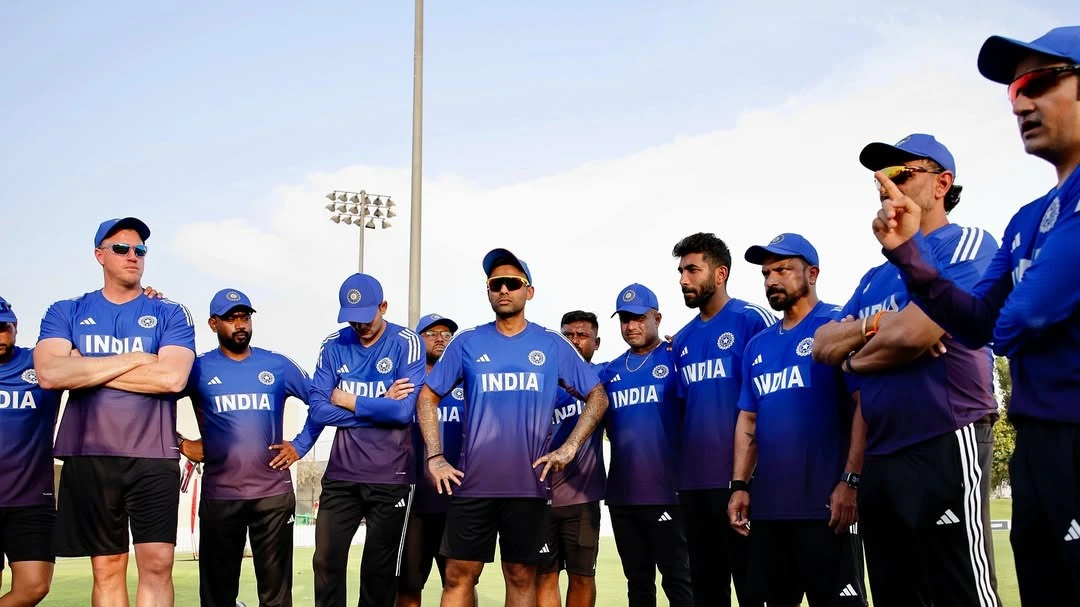
If you want to know where the next decade of Indian cricket is being forged, don’t look at the IPL lights. Look at the ICC Academy in Dubai. Today, Monday, February 23, 2026, as the Indian squad hits the nets under a hazy desert sun, the air is thick with more than just humidity. It’s thick with the pressure of a “New Era” that is trying to outrun the shadows of its legends.
While the headlines are currently screaming about the T20 World Cup group stages back home, the real “Final Camp” in Dubai isn’t just a practice session—it’s a tactical laboratory. India’s decision to make Dubai their permanent “neutral” base for high-intensity training is a direct response to the hybrid-model reality of modern cricket. If you’re going to win in the subcontinent, you have to master the desert first.
The Ro-Ko Paradox: Legends in the Departure Lounge
The biggest story in the camp isn’t the bowling speeds or the bat sensors; it’s the physical presence of Rohit Sharma and Virat Kohli.
We are witnessing the final act. Both have retired from T20Is and Tests (Rohit in May 2025, Kohli shortly after), and they are now “ODI Specialists.” In the Dubai nets, you can see the difference. While the younger lot like Abhishek Sharma and Tilak Varma are practicing 360-degree power-hitting for the T20 circuit, Rohit and Kohli are working on the “Lost Art of the 50-Over Build.”
There is a deliberate, almost meditative focus on their sessions. Kohli is spending hours against a side-arm thrower mimicking the high-arm action of a Shaheen Afridi or a Mitchell Starc. He’s not looking for the flashy ramp shot; he’s looking for the 5-meter gap at mid-wicket. This camp is their final attempt to “solve” the middle-over slowdown that cost India so many trophies in the last decade.
The ‘Ring of Fire’ and the Dew Factor
Why Dubai? It’s not just about the world-class gyms. It’s about the Dubai International Stadium’s unique “Ring of Fire” lighting and the way the dew transforms the pitch after 7:00 PM.
The coaching staff, led by Suryakumar Yadav in the T20s and the veteran brains trust for the ODIs, has been obsessed with “wet ball drills.” They are literally soaking the leather balls in buckets of water before handing them to the spinners. In Dubai, the ball doesn’t just skid; it becomes a bar of soap. If Kuldeep Yadav or Varun Chakaravarthy can’t grip the ball in the desert heat, they won’t be able to defend 300+ scores in the high-humidity finals of the Champions Trophy or the World Cup.
The Transition: Exit ‘A+’, Enter the Hunger
There’s a tension in the camp that wasn’t there two years ago. The BCCI’s recent move to scrap the Grade A+ category in central contracts has sent a shockwave through the hierarchy. With Rohit and Virat moved to Grade B (as one-format players), the power center has shifted to Shubman Gill and Jasprit Bumrah.
You can see it in the way the sessions are run. Shubman Gill isn’t just “the kid” anymore; he’s the one leading the tactical meetings. The Dubai camp is functioning as a “handover ceremony.” The seniors are providing the wisdom, but the “Generation Next” is providing the velocity. The focus is on “Powerplay Dominance”—a 10-over strategy that aims for 70+ runs without losing more than one wicket. It’s a high-risk gamble that the Indian team has finally decided to embrace.
The Hybrid Reality: Preparing for the Unpredictable
We have to talk about the elephant in the room: the Indo-Pak logistical nightmare. Because India doesn’t play in Pakistan, every “home” tournament is now a logistical circus. The Dubai camp allows the team to stay in a “neutral bubble.”
They are practicing on three different types of soil—the red clay of Mumbai, the black soil of Ahmedabad, and the dusty, slow turners of Lahore/Rawalpindi. The groundsmen in Dubai have recreated these strips specifically for the Indian team. It’s the ultimate “home advantage” away from home.
The Bottom Line
As of February 23, 2026, India isn’t just practicing cricket in Dubai; they are practicing resilience.
They are trying to figure out how to win the “big moments”—those ten-minute windows in a semi-final where the game slips away. Whether it’s through the sports psychologists on-site or the brutal fitness drills in 40-degree heat, the goal is to ensure that when the trophy is on the line, the legs don’t shake.
The Dubai camp is where the “Old Guard” says its long goodbye and the “New Guard” proves it can lead. It’s expensive, it’s intense, and for the fans back home, it’s the only thing that stands between another “almost” and a gold-plated legacy.











Leave a Reply