
Townhall Times, New Delhi
Reporter: Bhavika Kalra
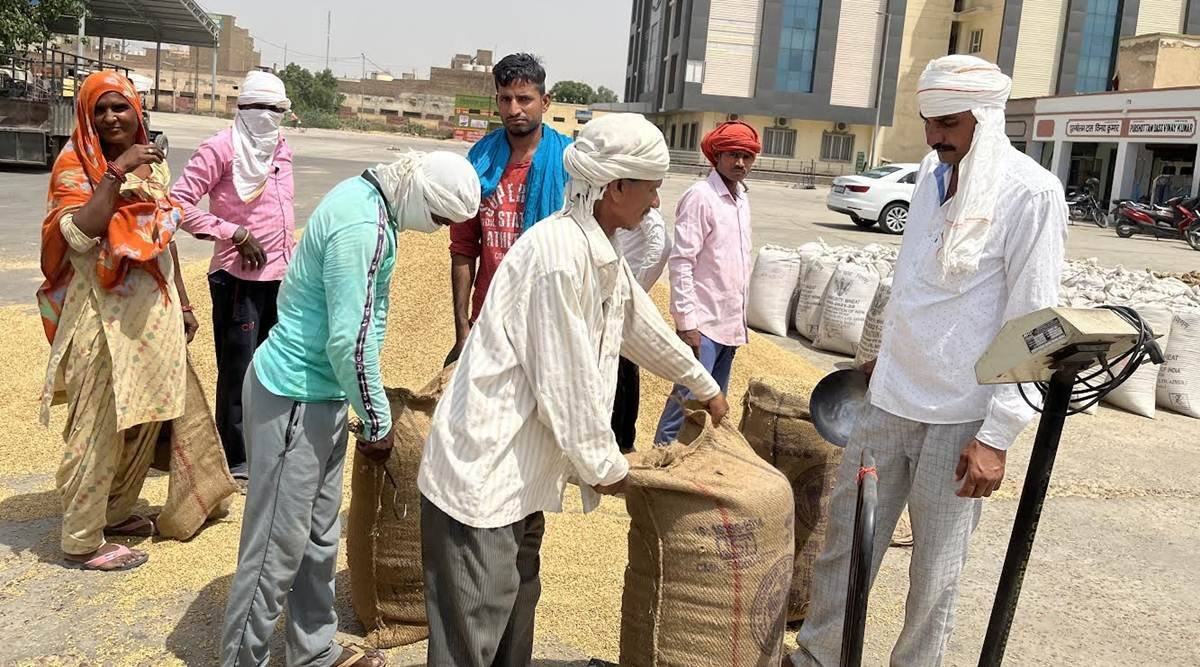
If you walk into the Kaithal Grain Mandi today, Monday, February 23, 2026, the air feels different. The usual rhythmic clanking of manual iron weights—a sound that has defined Haryana’s agricultural heartland for a century—is being replaced by the soft, high-pitched hum of electronic sensors. As the 2026-27 Rabi procurement season looms just five weeks away, Kaithal has become the frontline of a high-stakes technological war.
The Haryana Government has issued a “Digital Mandate”: if the scale isn’t electronic, the procurement isn’t legal. For the first time, the “Manual Kanda” is being treated like a criminal tool rather than a trade instrument.
The Death of ‘Kanda-Chori’ (Weight Theft)
For the average farmer in Kaithal, the old manual scales were always a source of quiet, simmering resentment. Every farmer has a story about the “Arhtiya’s magic foot” or the “weighted needle.” It was an open secret—a slight nudge of the foot on the base, a magnet hidden under the iron pan, or just the “rounding down” of a few hundred grams.
On a single bag of 50kg, a 200-gram “error” seems small. But when you’re a farmer bringing in 500 quintals of wheat, those “minor” discrepancies bleed you dry. With the Wheat MSP for 2026-27 set at ₹2,425 per quintal, every gram is a fiscal unit. The introduction of certified electronic weighbridges is finally putting an end to this invisible tax on the farmer’s sweat.
The ‘e-Kharid’ Integration: No More Pen-and-Paper Fraud
The real reason this reform is working in 2026, where previous attempts failed, is the API integration. These new scales aren’t just standalone machines; they are hard-wired into the e-Kharid portal.
In the old days, an agent would weigh the crop on a manual scale and then “manually” write the weight in a register. That was the loophole. Numbers could be changed, ink could be smudged, and “mistakes” were always in favor of the buyer.
Now, the process is a closed loop:
-
The Entry: The farmer enters the mandi with a digital gate pass.
-
The Weigh-In: The tractor rolls onto the electronic weighbridge. The weight is captured by a sensor and sent directly to the state’s central server.
-
The J-Form: The payment form is generated automatically based on the digital weight. There is no “middleman” entry involved.
The Arhtiya Resistance: Friction in the Pundri and Cheeka Mandis
It’s not all smooth sailing. If you sit down for a tea at the Kisan Bhawan in Pundri or Cheeka, you’ll hear the commission agents (Arhtiyas) grumbling. They are calling it a “technical disaster in the making.” Their main argument? Dust and heat. They claim that the fine grain dust of a busy mandi will clog the electronic sensors, leading to “hanging” screens and massive traffic jams of tractors.
But the Kaithal District Administration isn’t buying it. For the 2026 season, they’ve mandated the use of Industrial Grade Load Cells with IP67-rated dust protection. More importantly, they’ve set up a “Mobile Calibration Unit” that will patrol the mandis to ensure that no agent is “tampering” with the digital settings. It’s a game of cat-and-mouse, but for once, the cat has high-speed internet.
Logistics: The 24-Hour Lifting Rule
Weighing the crop accurately is useless if the grain sits in the open sun for a week. Moisture evaporation is a real thief; wheat can lose significant weight if left exposed, leading to disputes between the procurement agencies and the agents.
For the 2026 season, Kaithal is enforcing the “24-Hour Lifting Mandate.” Every bag weighed and tagged via the electronic system must be lifted by government-contracted trucks within 24 hours. These trucks are now equipped with GPS trackers that sync with the mandi’s weighing data. If a truck leaves the mandi with less weight than the electronic scale recorded, an automatic red flag is raised in the Pragati Dashboard at the CM’s office.
Why Kaithal? The ‘Smart Mandi’ Blueprint
Why has the government chosen Kaithal for such a hardline rollout? Because Kaithal is one of the top three wheat-contributing districts in Haryana. If you can fix the mandi culture in Kaithal—one of the most politically powerful and traditional agricultural belts—you can fix it anywhere in India.
This is part of the broader transition to “Smart Mandis.” The goal is to make the Indian grain market as transparent as a stock exchange. By capturing exact weights, the government can better manage its buffer stocks, reduce the “subsidy leakages” that cost the taxpayer billions, and most importantly, ensure that the Minimum Support Price (MSP) actually reaches the bank account of the man behind the plow.
The Bottom Line
As of February 23, 2026, the era of the “unreliable needle” is over in Kaithal. The iron weights are being hauled away to be melted down, and in their place are laser-calibrated sensors that don’t take bribes and don’t make “mistakes.”
It’s a victory for the farmer, a victory for the state’s balance sheet, and a massive leap toward a truly digital rural India. The “Digital Dharamkanta” is more than just a scale—it’s a restorer of trust in the marketplace.




Leave a Reply