
Townhall Times, New Delhi
Reporter: Bhavika Kalra
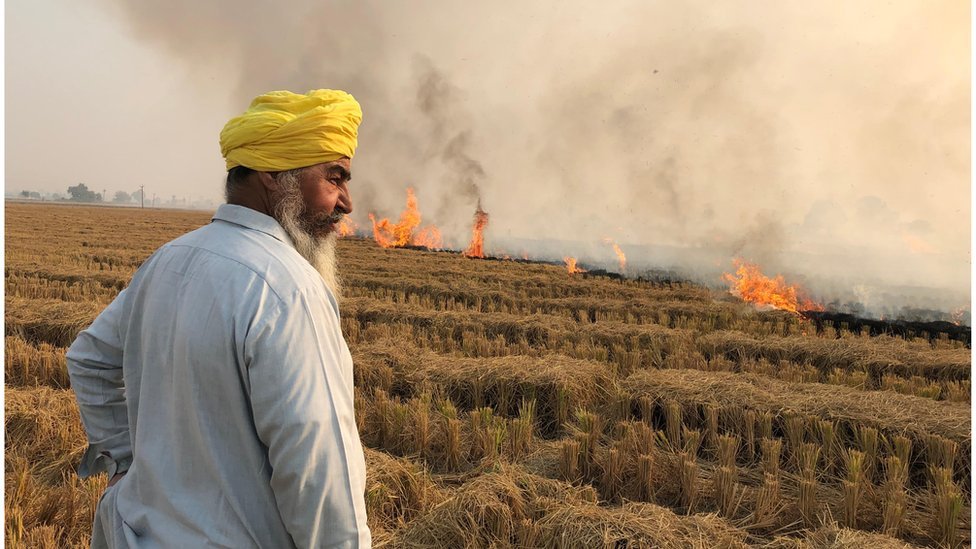
Every year, like clockwork, Northern India enters a state of environmental emergency. But as of February 17, 2026, the CAQM has upped the ante. They aren’t just talking about paddy anymore; they’ve issued a statutory “Direction No. 96” to Punjab, Haryana, and UP to eliminate Wheat Stubble Burning during the upcoming summer harvest.
If you think this is just about smoke, you’re missing the bigger picture. It’s a battle of economics, logistics, and raw survival.
1. The “Parali Protection Force” (PPF)
The biggest news this week is the creation of a dedicated Parali Protection Force. This isn’t just a few inspectors; it’s a squad of police, agriculture officials, and administrative officers tasked with patrolling the fields.
-
Evening Patrolling: Farmers have been getting smart, burning their fields late at night to dodge satellite detection. The new directive orders “intensified patrolling” during late evening hours to catch these fires that the satellites miss.
-
Mapping Every Farm: For the first time, every single farm is being mapped. Nodal officers are being tagged to groups of no more than 100 farmers to ensure there is “nowhere to hide.”
2. The Struggle of the Small Farmer
Why do they burn? It’s not because they want to choke the city; it’s because they’re in a race against time.
-
The 15-Day Window: Between harvesting paddy and sowing wheat, farmers have about two weeks. Burning is the only “free” way to clear the land.
-
Machine Shortages: While the government touts 3.5 lakh machines (Happy Seeders, Mulchers, etc.), many small farmers say they can’t afford the diesel or the rental costs. In response, the CAQM just mandated rent-free CRM machines for marginal farmers through Custom Hiring Centres (CHCs).
3. The Hidden Cost: Soil Suicide
The real tragedy isn’t just the air; it’s the soil.
-
Nutrient Loss: One ton of burnt stubble wipes out about 5.5 kg of Nitrogen, 2.3 kg of Phosphorus, and 25 kg of Potassium.
-
Killing the Good Guys: The heat from the fire (reaching 42°C in the soil) kills off essential microorganisms and earthworms that keep the land fertile. Farmers are literally burning their future yields for a short-term fix.
4. Policy vs. Reality: The New Strategy
The CAQM is shifting from “punishing” to “managing.”
-
Ex-situ Management: The new goal is to turn “waste into wealth.” This means collecting the straw to use in biomass power plants, bio-CNG units, and even as fodder.
-
Pusa Bio-Decomposer: This microbial spray is being heavily promoted. It melts the stubble into manure in about 20 days, but its success depends on how fast the government can get it to the remote corners of Punjab and Haryana.
The Bottom Line (Feb 17, 2026)
The Union Agriculture Minister recently said farm fires contribute only about 5-7% to Delhi’s smog on average, but during peak season, that number can hit 40%. The new “Parali Protection Force” is the government’s last-ditch effort to stop the blame game and start seeing results.








Leave a Reply