
Townhall Times, New Delhi
Reporter: Bhavika Kalra
By: Infrastructure & Policy Desk | New Delhi Tuesday, February 24, 2026
For years, the Srinagar International Airport has been a logistical nightmare disguised as a gateway. It’s a “Civil Enclave” trapped inside an Indian Air Force (IAF) airbase, struggling to breathe under a passenger load it was never built to handle. But as of this afternoon, that’s finally changing.
In the first landmark decision taken at the newly inaugurated ‘Seva Teerth’ PMO complex, the Union Cabinet has greenlit a ₹1,677 crore mega-expansion. This isn’t just a paint job; it’s a total reimagining of how the Kashmir Valley connects to the world.
The Numbers: Moving from 2 million to 10 million
The current terminal was designed for a peak of 2.5 million passengers. Last year, it crammed in nearly 4.5 million. The result? Long queues, security bottlenecks, and a chaotic entrance.
The approved ₹1,677 crore plan changes the math entirely:
-
The Footprint: The terminal is expanding from a cramped 19,700 sq. m to a massive 71,500 square meters.
-
Peak Hour Capacity: The new facility will handle 2,900 Peak Hour Passengers (PHP). That means no more standing in the rain or snow waiting for your turn at the gate.
-
The Wide-Body Move: For the first time, the apron will have a dedicated bay for Code E aircraft (like the Boeing 777 or Airbus A350). This is the key that unlocks direct flights to London, Dubai, and Jeddah without the “Delhi stopover.”
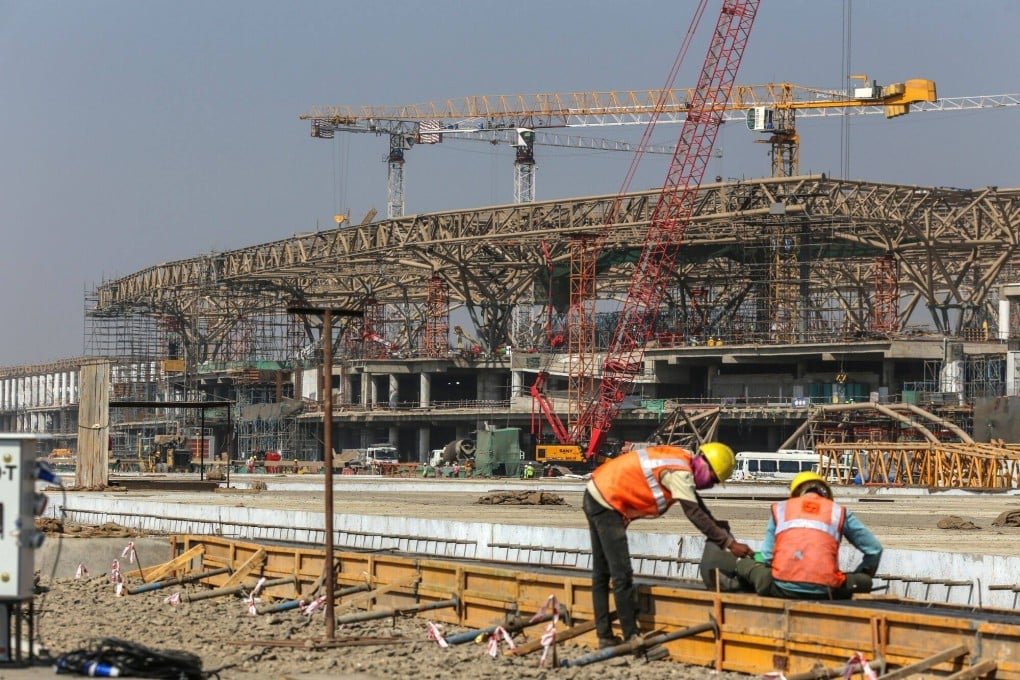
The Engineering Challenge: Building on a Battlefield
Srinagar isn’t a normal construction site. It is a high-security zone shared with the IAF’s Budgam base.
-
Civil-Military Separation: The expansion includes a new, reinforced perimeter. The goal is to allow 10 million civilians to move freely while ensuring the IAF’s combat readiness isn’t compromised.
-
The Himalayan Winter: To stop the notorious January “flight-cancellation season,” the project complements a long-overdue upgrade to the Instrument Landing System (ILS). The new terminal itself is being built to a 5-star GRIHA rating, meaning it will use advanced thermal insulation to cut heating costs by 40%.
Economic Impact: Saffron, Silk, and Tourism
This isn’t just for tourists. The expansion is a massive win for Kashmir’s exporters.
-
Direct Cargo: A new dedicated cargo terminal will allow Kashmiri saffron, cherries, and pashmina to be flown directly to international markets.
-
Multilevel Parking: To fix the gridlock at the airport entrance, a 1,000-car multi-level parking facility has been approved.
Timeline & Logistics
The government has cleared the transfer of 73.18 acres of land for this project. While the full completion is pegged for 2029, the first phase of the new terminal is expected to be operational by late 2027.
The Bottom Line
For too long, Srinagar Airport has felt like an afterthought—a crowded lounge attached to a runway. With this ₹1,677 crore infusion, the Cabinet is finally acknowledging that you can’t have a “Global Kashmir” with a “Tier-3” airport. The challenge now is the Land Acquisition and the breakneck construction speed required in a sensitive seismic zone.












Leave a Reply