
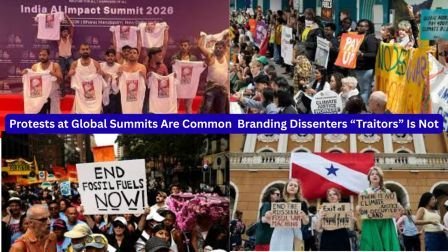
“Protests at Global Summits Are Common; Branding Dissenters ‘Traitors’ Is Not.”
In most parts of the world, dramatic protests at high profile international summits are nothing new. What is unusual, critics argue, is labeling protesters as “anti national” and unleashing harsh police action against them. That debate resurfaced recently after controversy surrounding the AI Summit held in India.
The event, projected as a landmark gathering on artificial intelligence, instead drew criticism for alleged mismanagement. Attendees complained about poor arrangements, including inadequate food and water facilities and reports of theft. An additional controversy erupted when a private university reportedly misrepresented a Chinese dog breed as its own, prompting backlash from a Chinese company and diplomatic embarrassment.
Opposition voices further alleged that the summit was turned into a political spectacle aimed at polishing the image of Prime Minister Narendra Modi rather than focusing solely on technological collaboration.
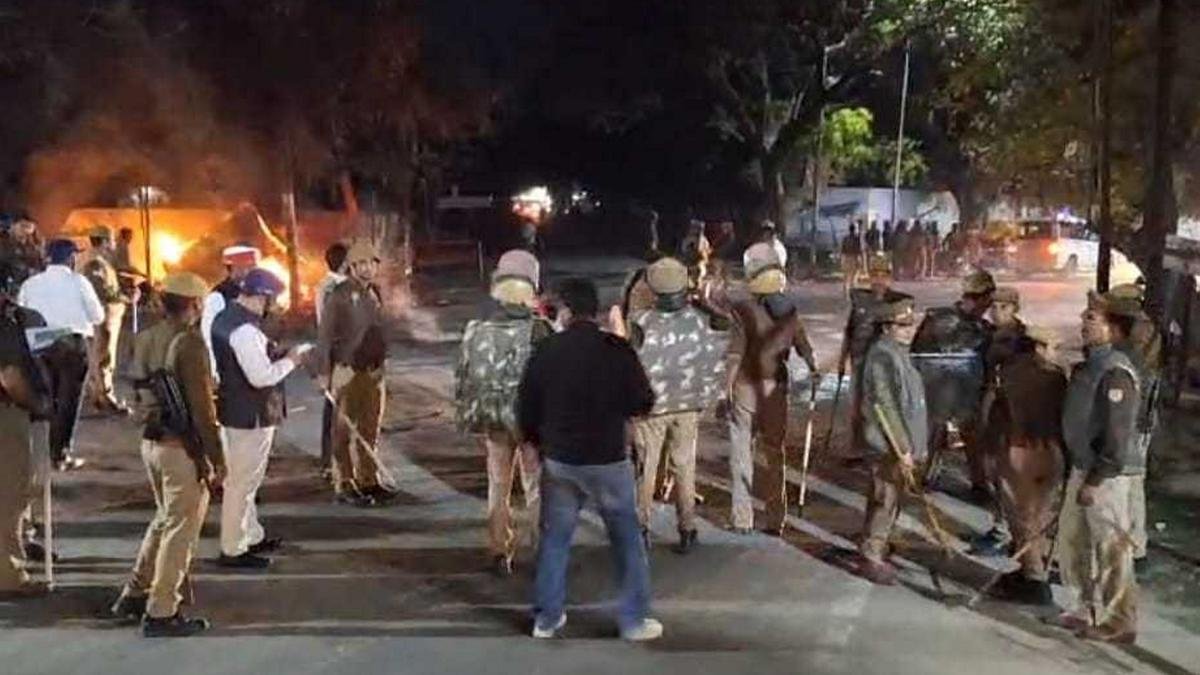
Tensions escalated when members of the Youth Congress staged a symbolic protest by removing their T shirts at the venue. Police swiftly intervened, and cases were reportedly filed against the protesters. Soon after, political rhetoric intensified. Some critics branded the demonstrators as “anti national,” while others went as far as calling them extremists.
The Congress party and several opposition groups condemned the police action, arguing that the response was disproportionate and reflective of a shrinking space for dissent. According to them, treating protest as sedition sends a chilling message about the health of democracy. “When disagreement becomes a crime, democracy begins to suffocate,” one opposition leader remarked.
Globally, provocative protests — including topless demonstrations — have been staged at major forums without participants being labeled traitors. During meetings of the World Economic Forum in Davos, activists from feminist groups such as Femen have repeatedly carried out topless protests with slogans targeting global inequality. Police detained them, but governments did not accuse them of betraying the nation.
Similarly, during G7 meetings and European Union summits in Brussels, activists have staged attention grabbing demonstrations focusing on women’s rights and anti fascist themes. Climate groups like Extinction Rebellion have organized semi nude protests in the United Kingdom to highlight the urgency of the climate crisis. In 2019, activists protested at the Ukraine peace summit in Paris with bold slogans painted across their bodies.
Such demonstrations are designed to shock and spark headlines — a calculated strategy to amplify marginalized issues. They often divide public opinion, with some viewing them as necessary civil disobedience and others dismissing them as indecent or disruptive. Yet in most democratic societies, they remain within the broader framework of protest politics.
The controversy around the AI Summit has therefore opened a larger conversation: Is dissent being criminalized? Around the world, protest may be inconvenient, loud, or even theatrical — but calling it treason is a line many democracies are reluctant to cross.






Leave a Reply