
Townhall Times, New Delhi
Reporter: Bhavika Kalra
By: Political Bureau, New Delhi Monday, February 23, 2026
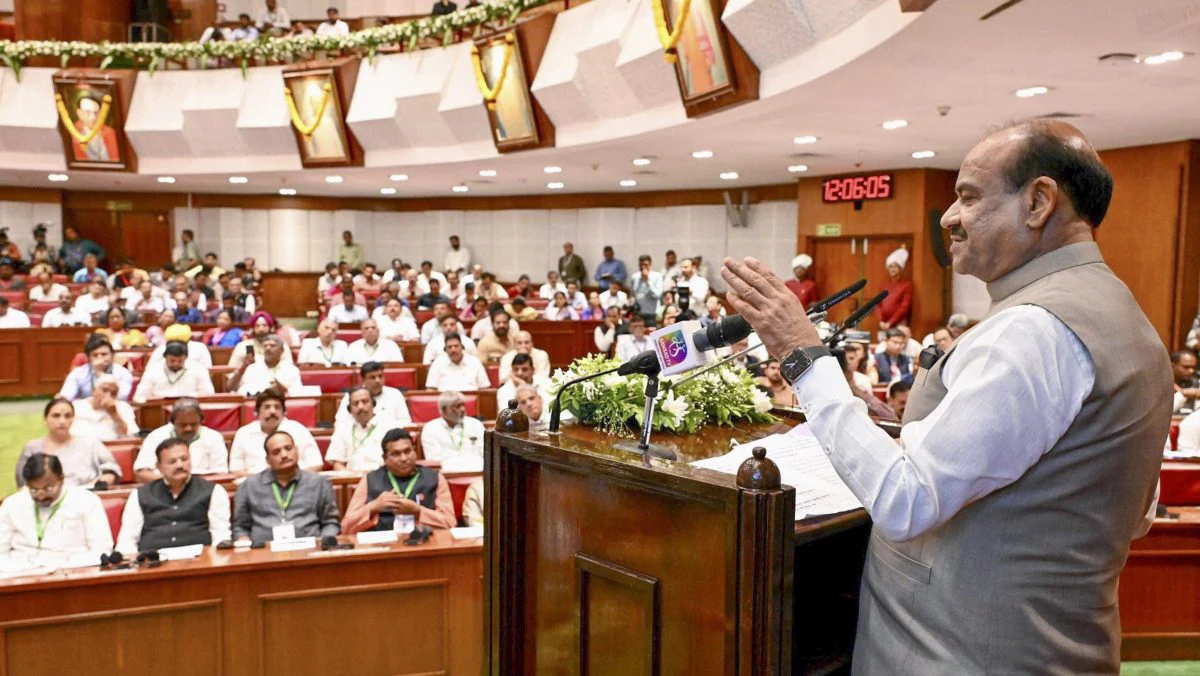
In the wood-paneled halls of the Lok Sabha Secretariat this afternoon, a quiet administrative order was released that might just be the most significant shift in Indian foreign policy since the end of the Cold War. Speaker Om Birla has officially pulled the trigger on a plan he’s been teasing for nearly a year: the formation of Parliamentary Friendship Groups (PFGs) with over 60 nations.
On the surface, it looks like a standard procedural update. But look closer at the names—Shashi Tharoor, Abhishek Banerjee, Supriya Sule, and Asaduddin Owaisi. By putting the fiercest critics of the government in the “President’s Chair” of these international groups, Birla isn’t just making friends; he’s weaponizing Indian democracy.
The Post-Pahalgam Pivot
To understand why this happened today, we have to look back at the chaos of 2025. After the Pahalgam terror attack and the subsequent Operation Sindoor, the Modi government did something radical. Instead of sending seasoned diplomats to explain India’s stance, they sent multi-party delegations of MPs.
We saw the strange but effective sight of Gaurav Gogoi and Nishikant Dubey—who usually spend their afternoons screaming at each other over GST—standing side-by-side in European capitals, defending India’s sovereign interests. The world was stunned. It’s hard for a foreign critic to call India an “eroding democracy” when the leader of the opposition is sitting right there, agreeing with the government on national security. Today’s announcement makes that “war-time unity” a permanent, peacetime institution.
The ‘Dream Team’ of Chairs
Birla has played a masterstroke in the allocation of these groups. He has effectively created a “Shadow Ministry of External Affairs” made up of the brightest minds in Parliament.
-
The Intellectual Heavyweights: Dr. Shashi Tharoor (INC) and P. Chidambaram (INC) are, unsurprisingly, taking the lead for some of the most complex Western and Commonwealth relationships.
-
The Strategic Assets: By giving Asaduddin Owaisi (AIMIM) a leading role in the group for Oman, Birla is leveraging personal and cultural ties that a traditional bureaucrat simply doesn’t have.
-
The Future Guard: Akhilesh Yadav (SP), Abhishek Banerjee (AITC), and Kanimozhi Karunanidhi (DMK) have been given chairs for heavyweight partners like Australia, Brazil, and Germany.
Other heavy hitters like Ravi Shankar Prasad, Anurag Thakur, and Derek O’Brien are set to lead groups for the USA, the EU Parliament, and Japan.
Why ‘Track-Two’ is Now ‘Track-One’
Standard diplomacy is often trapped in the “Grip of the Executive.” It’s bound by treaties and trade quotas. Parliamentary diplomacy is the “human” layer. When an Indian MP sits with a member of the Bundestag or a US Congressman, they talk about Digital Parliament tools, AI Ethics, and Social Policy with a freedom that an ambassador doesn’t have.
Birla’s doctrine is clear: build a relationship so deep between the lawmakers that even if the Prime Ministers or Presidents change, the bridge remains.
The Bangladesh Litmus Test
Just last week, Birla was in Dhaka for the swearing-in of the new Tarique Rahman government. While the “Deep State” in both countries was still navigating the fallout of Sheikh Hasina’s exit, Birla was already there, shaking hands with the new MPs, emphasizing “shared democratic values.” The newly formed India-Bangladesh PFG will now be the primary vehicle to ensure that the soil of Bangladesh isn’t used for anti-India activities—a task often too sensitive for formal diplomats.
The Final Word
As of this Monday evening, the message from the Lok Sabha is loud and clear: India is confident enough in its democracy to let its opposition represent the nation. In a world of rising autocracies, this is India’s ultimate soft-power play.
The MPs are no longer just voting on bills; they are the new frontline of India’s global assertion.


Leave a Reply