
Townhall Times, New Delhi
Reporter: Bhavika Kalra
National Desk | February 15, 2026
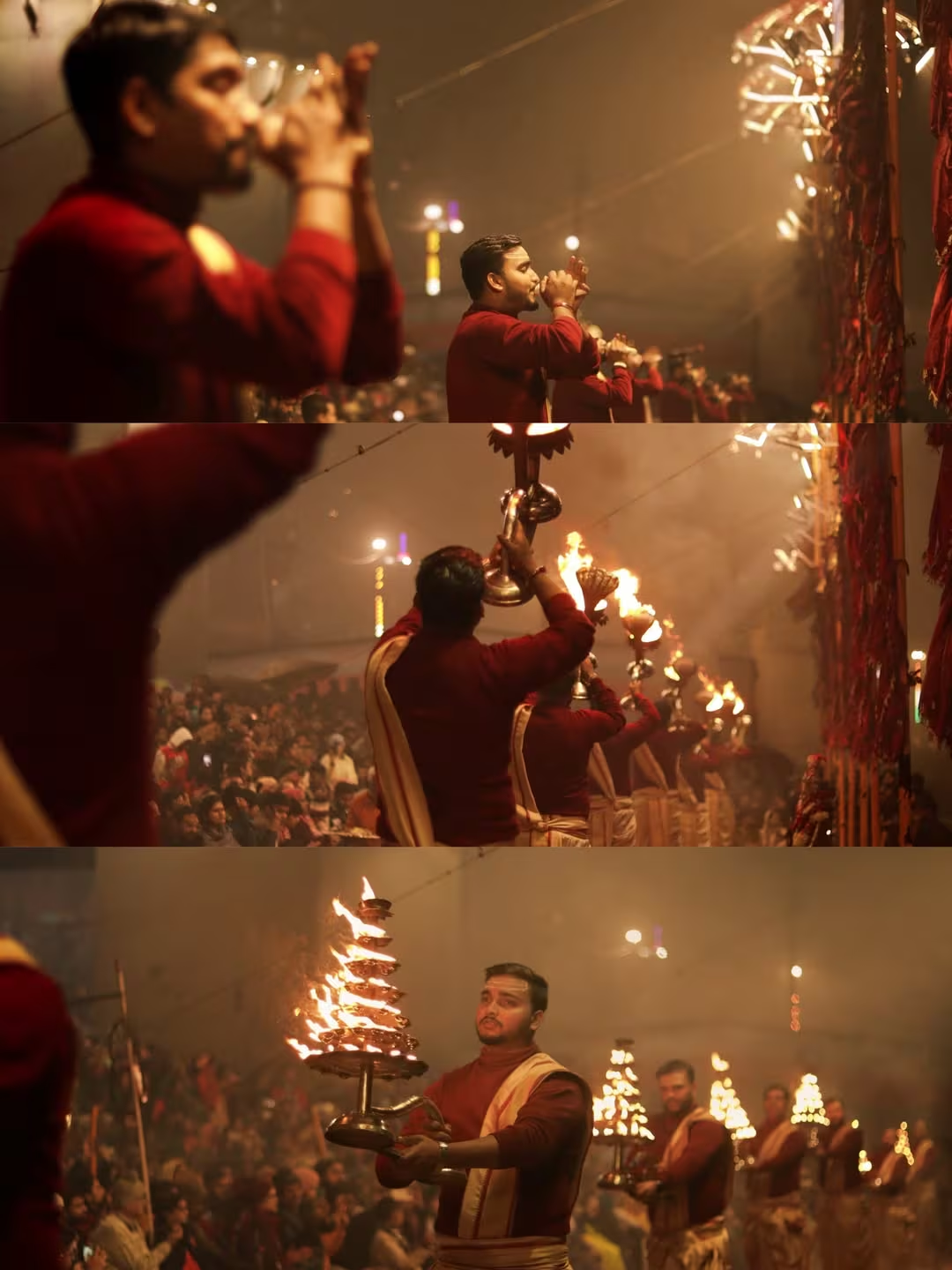
If you walked through any Indian street last night, you couldn’t miss it—the smell of incense, the glow of lit-up temples, and that unmistakable, rhythmic chanting of “Om Namah Shivaya.” Across the country, from the freezing Himalayan peaks to the humid temple towns of the south, India has been wide awake for Maha Shivaratri.
This isn’t just a holiday; it’s a massive, country-wide spiritual marathon. Millions have spent the last 24 hours fasting and staying up through the night, all dedicated to the “Adi yogi”—Lord Shiva.
The Vibe at the Big Temples
The scenes at India’s major Jyotirlingas have been nothing short of spectacular.
-
Varanasi (Kashi): The Kashi Vishwanath Temple has been a sea of marigolds and Ganga water. Pilgrims have been lining up for miles, waiting hours just for a few seconds to perform Jal Abhishek.
-
Ujjain: Over at Mahakaleshwar, the famous Bhasma Aarti (done with sacred ash) drew a crowd so large that the local administration had to deploy extra battalions just to keep the queues moving.
-
The Coastline: Down in Somnath, the temple looked incredible against the night sky, with devotional music echoing over the Arabian Sea.
Why the All-Nighter?
Unlike most festivals that are about daytime fun and food, Shivratri is an “after-hours” event.
-
The Mythology: It’s celebrated as the wedding night of Shiva and Parvati, but it’s also the night Shiva is said to have performed the Tandava—the cosmic dance of creation and destruction.
-
The Logic: Spiritually, the night is divided into four prahars (quarters). Devotees believe that staying awake and keeping their spine erect during this specific night helps tap into a natural surge of energy. It’s less about “staying up” and more about “waking up” internally.
Fasting, Milk, and Bel Leaves
The rituals are simple but intense. Most people observe a strict fast—some don’t even touch water. The Abhishek is the main event, where the Shiva Lingam is bathed in milk, honey, and curd. And of course, no puja is complete without the Bel Patra (wood apple leaves), which are said to be Shiva’s favorite.
Beyond the Temples: Economy and Eco-Checks
It’s easy to overlook, but Shivratri is a massive boost for the local economy.
-
Small Business Win: From the guy selling flowers and milk outside the gate to the hotels and transport workers, the “spiritual tourism” surge is a lifeline for thousands of families.
-
The Green Shift: Interestingly, many temples this year pushed for an “eco-friendly” Shivaratri. There’s been a big move to recycle the massive amounts of offered flowers into organic compost and to cut down on plastic bags for prasad.
The Security Headache
Managing millions of people in one place is a nightmare for the police. In every major temple town, CCTV cameras, medical camps, and emergency teams have been on 24/7 standby. Roads were diverted, and barricades were everywhere, but the general mood remained peaceful and disciplined despite the heat and the crowds.
The Final Takeaway
Whether it’s a high-tech yoga session in a Bengaluru ashram or a simple lamp lit in a tiny village in Bihar, the sentiment is the same. Maha Shivaratri remains the ultimate symbol of Indian unity—a night where the whole country stops, looks inward, and chants “Har Har Mahadev” in unison.
As the sun comes up today and the long fasts are finally broken, the energy of the “Great Night” is still very much hanging in the air.




Leave a Reply