
Townhall Times, New Delhi
Reporter: Bhavika Kalra
If you were out on the streets of the National Capital today, Monday, February 23, 2026, you felt the shift. It wasn’t the weather; it was the sudden, jarring presence of the Bomb Detection and Disposal Squad (BDDS) and the low-frequency hum of siren-led convoys cutting through the usual Monday morning crawl.
By 10:00 AM, the city was vibrating with a specific kind of dread. This wasn’t just another “unclaimed bag” call. This was a synchronized, multi-target threat sent via the dark corners of the web, aimed directly at the heart of Indian sovereignty: the Delhi Vidhan Sabha and the Red Fort.
The Timeline of a “Digital Siege”
The panic didn’t start with a loud noise; it started with a “ping.” Around 8:00 AM, the official email inbox of the Delhi Assembly Speaker, Vijender Gupta, received a message that would eventually trigger a Level 1 security response across the entire NCR.
The email wasn’t just a vague warning. It was a manifesto of chaos, allegedly sent by a group calling itself the “Khalistan National Army.” The sender didn’t just threaten; they provided a chillingly specific schedule of destruction:
-
9:11 AM: The “Zero Hour” for the Red Fort.
-
1:11 PM: Targeted strikes at Army Public Schools (specifically mentioning Dhaula Kuan).
-
3:11 PM: The final “echo” at the Delhi Vidhan Sabha.
The language was raw, written in Punjabi script, and personal targeting the Prime Minister and Home Minister with rhetoric that harkened back to the unrest of the 1980s.
Ground Zero: The Civil Lines Lockdown
At the Delhi Legislative Assembly in Civil Lines, the response was clinical but fast. By the time the clock hit 10:30 AM, the entry gates were locked. Legislators, who were arriving for early committee meetings, were quietly told to stay in the open lawns. Sniffer dogs—the elite Labradors of the Delhi Police—moved through the corridors where laws are debated, sniffing for anything that didn’t belong.
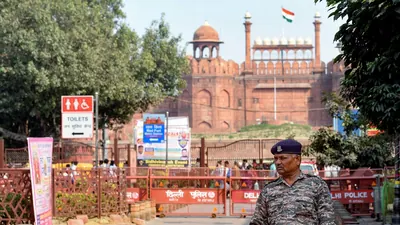
Simultaneously, the Red Fort—the ultimate symbol of Indian power—was turned into a fortress within a fortress. The CISF (Central Industrial Security Force), which handles the monument’s security, didn’t just do a routine check. They cleared the tourists. For a brief moment, the bustling heart of Old Delhi went silent, save for the heavy boots of the anti-terror units.
The School Crisis: Board Exams vs. Bomb Threats
The most stressful part of the day took place in the school zones. Army Public School (Dhaula Kuan) and Air Force Bal Bharti School (Lodhi Road) both received the same email. This wasn’t just a threat to a building; it was a threat to children.
What made it worse was the timing. It’s Board Exam season. Thousands of students were either mid-exam or about to start when the evacuation orders came. School administrations were in an impossible position: follow the protocol and evacuate, or keep the kids calm and finish the exam? In most cases, the police made the call—evacuation first. The “hoax” was declared by 2:00 PM, but for the parents waiting outside the gates in Dhaula Kuan, the damage was already done.
The Investigation: Tracking the “VPN Ghost”
Why can’t the police just catch these people? This is the question every angry citizen is asking today. The answer lies in the technical “mask” the senders are wearing.
The Delhi Police Cyber Cell has confirmed that the emails were sent using a Virtual Private Network (VPN), likely bouncing off servers in North America or Eastern Europe. This isn’t a “kid in a basement” job. This is someone who knows how to hide their digital footprint.
But there’s a catch. Sources in the intelligence community suggest that while the email claimed to be from a “Khalistani” group, the wording and the timing seem to align with a broader Lashkar-e-Taiba (LeT) alert from two days ago. Investigators are looking at whether this is a “false flag” operation—one group using another’s name to create communal friction.
The Cost of a Hoax
Let’s talk about the math. Every time an email like this goes out, the state spends millions:
-
Deployment: Hundreds of personnel from Fire Services, Police, and NSG.
-
Economic Loss: Thousands of man-hours lost as the Secretariat and Assembly shut down.
-
Psychological Toll: The “fear baseline” of the city moves up another notch.
The Delhi Police have recorded over 50 such threats in the last 18 months. Only a handful have led to arrests, usually because the sender didn’t use a VPN. The ones who do use encryption remain digital ghosts, mocking the system from behind a screen.
The Bottom Line
As of this evening, Monday, February 23, 2026, the “All-Clear” has been sounded. No explosives were found. The Red Fort has reopened to tourists, and the Assembly is prepping for its next session.
But the “Khalistan National Army” email warned of a “sustained campaign” over the next three days, specifically mentioning the Delhi Metro. The high alert hasn’t been lowered; it’s just become invisible. The police are now conducting random “anti-sabotage” checks at metro stations from Rajiv Chowk to Noida Sector 18.
Delhi is safe for now, but the city is breathing a little more shallowly tonight.




Leave a Reply