
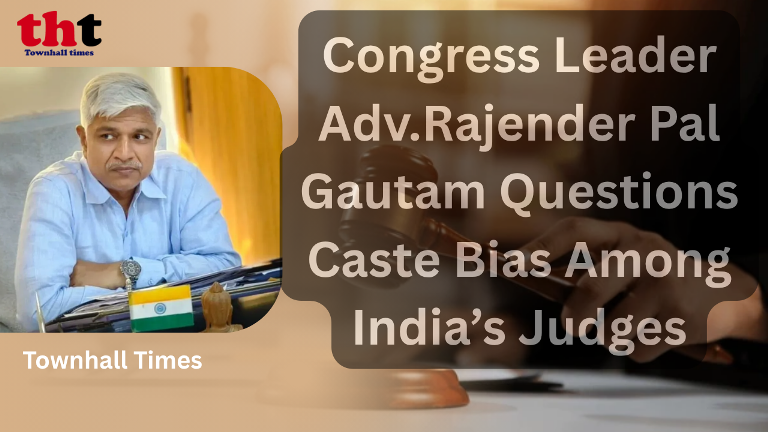
Congress Leader Rajender Pal Gautam Questions Caste Bias Among India’s Judges
Townhall Times
A series of recent judgments from Indian courts have sparked serious concerns over deep-rooted caste bias within sections of the judiciary. From Chhattisgarh to Odisha, cases involving Dalit and tribal victims have intensified calls for urgent intervention by the Supreme Court.
In 2021, the Chhattisgarh High Court granted bail to Muslim accused in a rape case, arguing that “persons of a particular caste cannot rape women belonging to Scheduled Castes or Scheduled Tribes.” This reasoning shocked many observers, as it was based not on evidence but purely on caste identity.
This mindset is not new. Back in 1992, the Rajasthan High Court made a similar observation in a case of gang rape of a Dalit social activist, stating that “a man of the same caste cannot commit rape.” Despite three decades having passed, the legal reasoning shows how deep caste prejudice remains.
A similar logic surfaced again in the notorious Hathras case, where despite overwhelming evidence of brutality against a young Dalit woman, the court held that “certain castes” simply do not commit such crimes.
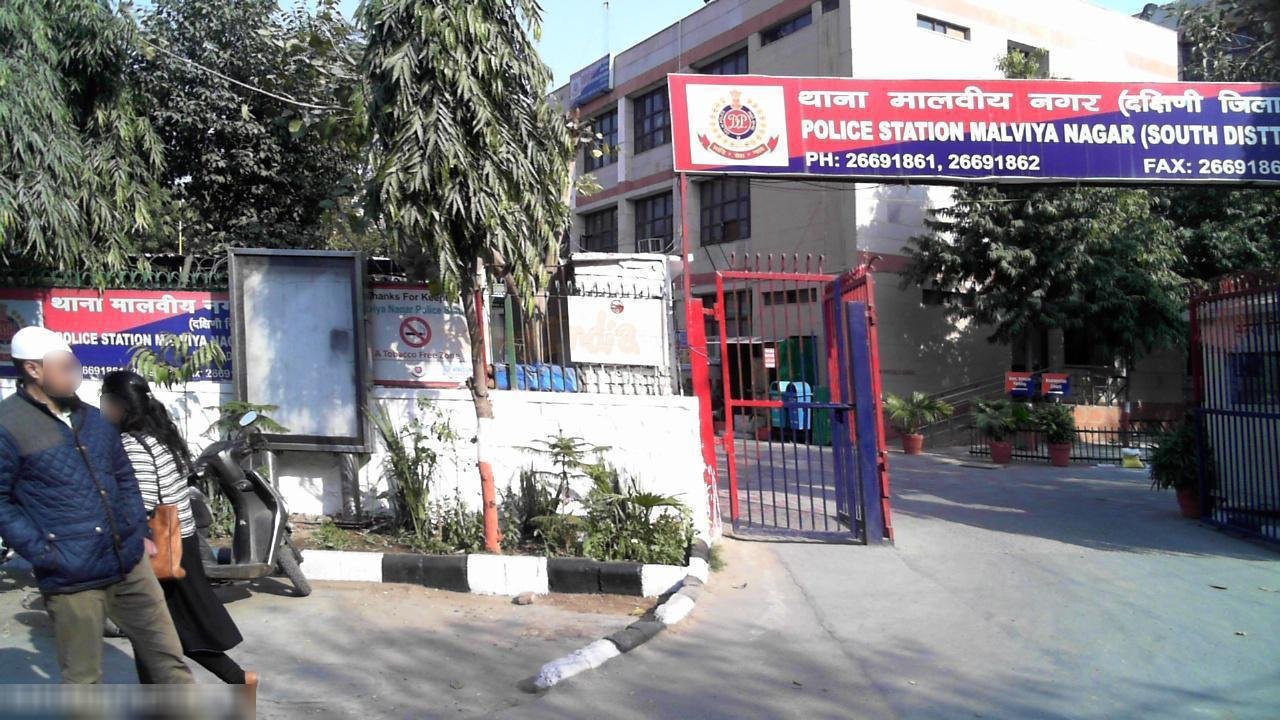
The most recent and disturbing example comes from Odisha. Here, two social activists, Shri Kumeshwar Nayak and Sidh Mali, were arrested for protesting against illegal mining that threatened to destroy their village. On May 9, 2025, the Odisha High Court granted bail to Nayak but imposed a shocking condition: that he must clean the local Kashipur police station every morning from 6 a.m. to 9 a.m.
The judge further ordered the police station to provide Nayak with cleaning supplies like brooms and phenyl so he could carry out the task. Legal experts called this condition unprecedented and humiliating. Typically, bail conditions might require reporting to the police station, refraining from contacting witnesses, or staying within district limits — but forcing a Dalit activist to sweep a police station reflects blatant caste bias.
When the matter later reached the District Sessions Court, the same degrading bail condition was upheld. This has deepened fears that when even high court judges see Dalit and tribal activists as fit only for menial tasks, how can ordinary citizens ever expect equal justice?
According to legal experts, neither the Constitution nor the Criminal Procedure Code authorizes such discriminatory bail conditions. Many now argue that India’s Chief Justice and the Supreme Court must take immediate suo motu notice and hold accountable those judges who hand down such biased orders.
Congress leader Rajender Pal Gautam has also raised strong objections, questioning how judges with casteist mindsets can deliver impartial justice. Activists warn that unless this mindset is confronted, violence and discrimination against Dalits and Adivasis will only rise, and courts themselves risk becoming instruments of caste oppression.
The core question remains: Will India’s highest court act to ensure that justice truly becomes equal for all — beyond words written on paper?









Leave a Reply