
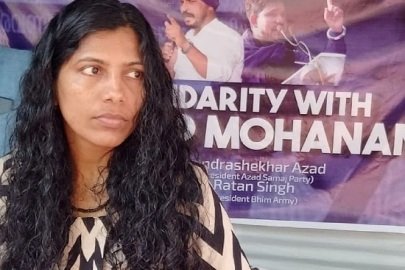
The full story of Deepa Mohanan (also referred to as Deepa P. Mohanan), a Dalit (Scheduled Caste) PhD scholar, centers on her decade-long struggle against alleged caste-based harassment and discrimination at Mahatma Gandhi University (MGU) in Kottayam, Kerala—not a Central University, but a state university. (Note: The query mentions “Central University,” which may be a mix-up; MGU is affiliated with UGC guidelines but is state-run.)Key Timeline and Details
- Background: Deepa joined MGU’s International and Inter University Centre for Nanoscience and Nanotechnology (IIUCNN) in 2011 for an MPhil (after a Master’s in Medical Microbiology), transitioning to PhD. She was reportedly the only Dalit scholar in her cohort.
- Allegations: She accused the then-joint director (later director) Nandakumar Kalarikkal of sustained caste-based discrimination starting around 2011–2014. This included:
- Denying lab access, chemicals, polymers, and workspace essential for her nanotechnology research.
- Withholding stipend payments.
- Verbal abuse, casteist remarks, and systemic obstruction (e.g., locking her in the lab alone).
- Delaying her degree progression, MPhil certificate, and overall PhD completion for over 10 years.
- Some reports mention additional claims of sexual harassment.
- Complaints and Actions:
- 2015: Filed a caste-discrimination complaint with the university. A two-member committee upheld her claims and recommended full research facilities, but implementation was allegedly poor.
- 2016: Filed a police complaint under the SC/ST (Prevention of Atrocities) Act. She was detained for two days while trying to submit a complaint to the Governor.
- Ongoing complaints to university administration, police, and UGC-related bodies yielded limited results initially.
- Hunger Strike (2021): On October 29, 2021, Deepa began an indefinite hunger strike outside the university to protest the harassment and demand Kalarikkal’s removal. She framed it as a fight against caste discrimination, vowing not to become “another Rohith Vemula.” The strike lasted 11 days, gained nationwide attention (including solidarity from academics, activists, and media), and highlighted “endemic” caste bias in Indian higher education.
- Outcome:
- November 8, 2021: Under pressure (including Kerala government intervention under CM Pinarayi Vijayan), MGU Vice Chancellor Sabu Thomas removed Kalarikkal from his director post at IIUCNN and accepted her demands.
- Deepa ended her strike, calling it a victory for marginalized students.
- She eventually completed her PhD in 2024, after the prolonged delays.
Connection to UGC RulesDeepa and supporters demanded effective implementation of UGC (University Grants Commission) regulations on preventing caste discrimination in higher education. These include:
- Guidelines for SC/ST students’ welfare.
- Anti-discrimination measures, complaint mechanisms, and penalties for violations.
- Broader calls (post-2019 UGC letters) for universities to report and act on caste bias cases.
Her case exposed gaps in enforcement—universities often ignored or delayed action, even when complaints were upheld. It sparked discussions on systemic casteism in academia (especially in STEM), intersectional issues (caste + gender), and why marginalized students face barriers despite reservations.This case remains a landmark example of resistance against institutional casteism, often cited alongside others like Rohith Vemula or Payal Tadvi. It underscores the need for stronger UGC enforcement to protect SC/ST scholars



Leave a Reply