
Townhall Times, New Delhi
Reporter: Bhavika Kalra
National Desk | February 15, 2026
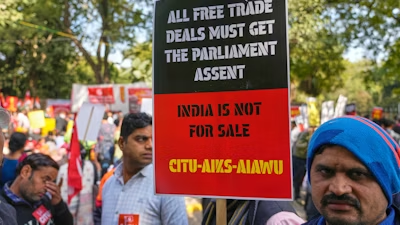
The streets are blocked, markets in the rural belts are shut, and the “Bharat Bandh” (national strike) is in full swing. What started as a few local protests has exploded into a full-blown political crisis. The reason? A new interim trade deal between India and the U.S. that farmers say will “sell out” the Indian countryside to American agribusiness.
What’s the actual fight about?
The government says this deal will boost exports and bring in investment. But the farmers see it differently. They see a future where cheap, subsidized American products flood the Indian market, making it impossible for a small-scale farmer in Punjab or Maharashtra to compete.
The Big Fears:
-
The Dairy Disaster: India’s milk industry is run by small producers and cooperatives (think Amul). Farmers are terrified that if large-scale U.S. dairy enters the market at low prices, local milk prices will crash, destroying rural incomes overnight.
-
Subsidized Imports: U.S. farmers get massive government subsidies. Indian farmers argue that lowering tariffs means they’ll be fighting a “losing battle” against industrial-scale American oilseeds and grains.
-
The Trust Gap: The biggest issue might not even be the deal itself, but the way it happened. Many farmer leaders claim they weren’t even asked for their input. When you’re talking about the livelihood of half the country, “lack of consultation” is a recipe for disaster.
The Political Firestorm
Parliament is currently a shouting match. The Opposition is calling the deal “pro-corporate” and “anti-farmer,” while the government is scrambling to explain that sensitive products are still protected.
The problem is that historical memory is fresh. After the massive protests against the farm laws a few years back, the organizational strength of these unions is at an all-time high. They know how to mobilize, they know how to use social media, and they know how to sustain a protest for months.
The Economic Tightrope
The government is in a tough spot. They want to strengthen ties with the U.S.—especially for things like technology and defense—and trade is the “glue” for that relationship.
-
The Upside: Liberalization can create jobs and bring in tech.
-
The Downside: If the social cost is a rural uprising, the “economic gain” might not be worth the political price.
What Happens Next?
This isn’t going to blow over in a day. We’re likely looking at one of three things:
-
The Climbdown: The government offers specific written guarantees or “tweaks” the deal to exclude sensitive crops.
-
The Standoff: Protests intensify, leading to prolonged road blockades and potential supply chain issues for cities.
-
The Middle Path: A formal parliamentary debate where the deal is scrutinized line-by-line to build some version of public trust.
The Bottom Line: India is trying to join the global “big leagues” of trade, but it’s doing so with a massive agricultural base that isn’t ready for a head-to-head fight with American industrial farms.
As the chants of the protesters get louder at the borders of Delhi, the message is clear: You can’t sign a deal in a boardroom in Washington that affects a farmer in a village in India without expecting a fight.




Leave a Reply