

Why the Court Must Look Beyond Edited Clips and Loaded Labels: A Critical Examination of ASG S. V. Raju’s Submissions (Supreme Court Hearing — 20 November 2025)
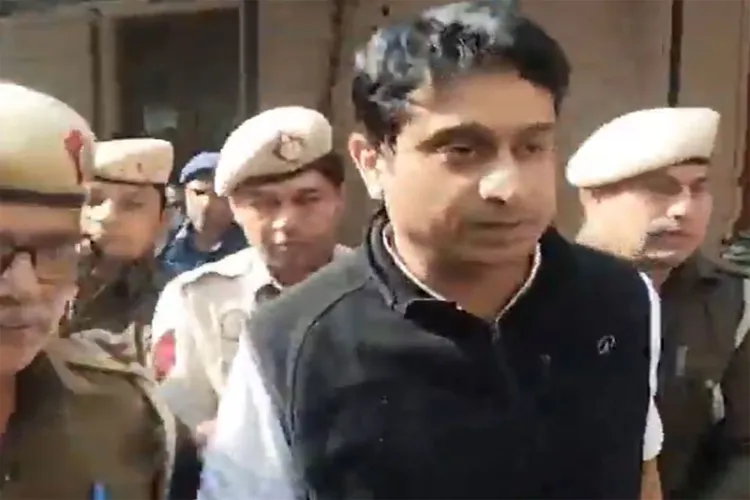
The Supreme Court’s bail hearing in the Delhi “larger conspiracy” case again raised the fundamental question: can undertrial detention, stretched endlessly through procedural delay, be allowed to operate as life imprisonment in the guise of a never-ending trial? When Additional Solicitor General S. V. Raju presented the prosecution’s objections to the bail of Umar Khalid, Sharjeel Imam, and others, the submissions relied heavily on media-friendly jargon, headline-driven labels such as “intellectual terrorists,” and carefully curated micro-clips of speeches rather than full, unedited evidence.
In doing so, the argument mirrored the language commonly used by partisan outlets: short, dramatic video excerpts that can be trimmed, spliced, or stripped of context, and rhetorical phrases designed to provoke emotion rather than demonstrate proximate criminality. It is precisely for this reason that courts must insist on viewing complete, unedited recordings, along with transcripts and source verification.
A fragment of a speech cannot be treated as the whole speech, just as an edited line cannot be presumed to reflect intent. The question naturally arises: why were only tiny portions of speeches played in court when the full recordings exist and could be viewed in entirety? When liberty is at stake, contextual completeness is not optional; it is mandatory. The prosecution’s decision to present micro clips rather than full videos weakens its own case and creates a risk of misinterpretation. The reliance on the phrase “intellectual terrorist” is deeply troubling.
It suggests that education — or the ability to articulate political critique — is itself an aggravating factor. This framing criminalises dissent, delegitimises academic spaces, and constructs an artificial hierarchy of suspicion in which mere articulation becomes incriminating. Such rhetoric is not evidence. It is an attempt to create guilt by vocabulary rather than by legal proof. The claim that protests were part of a larger plot for “regime change,” “economic blockade,” or an internationally timed embarrassment lacks substantive backing. Protests began organically months before the political events cited by the prosecution.
Mobilisation through student groups, civil society circles, or messaging platforms is not terrorism; it is the functioning of democratic dissent. Without weapons, financing trails, instructions for violence, or operational execution, it is untenable to stretch political speech into a terror conspiracy. The most glaring flaw in the prosecution’s stance concerns delay.
Undertrial detention extending over five years cannot be dismissed as a mere administrative inconvenience. Delay, when it erodes liberty, becomes punishment. And punishment without conviction is an affront to Article 21. When the State has taken years to investigate, years to file counter-affidavits, and still cannot commence trial, it cannot claim that the accused are “taking advantage” of delay. No one “takes advantage” of remaining in jail for half a decade. When trial remains distant, denial of bail ceases to be a preventive measure and becomes a punitive regime — effectively life imprisonment in the form of an endless trial. The prosecution’s argument that courts should simply “expedite trial instead of granting bail” disregards the reality that expeditions are mere promises unless supported by actual progress.
Without clear timelines, the assurance becomes hollow. In the present case, justice demands that bail be granted where the State is unable to demonstrate proximate causation, produce unedited evidence, or justify prolonged detention.
The Constitution does not allow rhetorical labels, doctored snippets, and speculative theories to override the presumption of innocence. The judiciary must weigh actual evidence — not edited excerpts — and must safeguard liberty where the State has failed to proceed with its own case. Any other approach risks normalising pre-trial incarceration as a substitute for trial itself, a precedent that would be dangerous not only for the accused in this case but for the future of dissent in India.









Leave a Reply