
Townhall Times, New Delhi
Reporter: Bhavika Kalra
By: Strategic Affairs Desk New Delhi | Feb 24, 2026
For years, the biggest threat to India’s security wasn’t a lack of bravery—it was the “Left Hand” not knowing what the “Right Hand” was doing. If a suspect was flagged by a beat constable in Mumbai, that information might take weeks to reach an intelligence officer in Delhi. By then, the trail was cold.
The Ministry of Home Affairs’ new “Prahaar” policy is designed to kill that lag time. It’s an attempt to force a “Unified Intelligence Grid” onto a country where state police forces often guard their data like personal secrets.
The “Digital Wall”: Real-Time Intelligence
The core of Prahaar is a centralized digital platform. Think of it as a massive, live “brain” that connects every state police department, the Border Security Force (BSF), and the National Investigation Agency (NIA).
In the old days, if a cybercrime unit in Hyderabad found a suspicious crypto-wallet, they’d have to file a report, send it up the chain, and wait. Under Prahaar, that data is supposed to hit a unified grid instantly. If that same wallet is accessed from a mobile tower near the LoC in Kashmir, the system triggers a “red flag” across the entire network. It’s about moving from “investigating the past” to “monitoring the present.”
Financial Strangulation: Beyond Hawala
Terrorists don’t move without money, but the ways they move it have changed. Prahaar targets the three-headed monster of modern terror funding:
-
Crypto-Laundering: The policy gives the NIA specialized tools to track “tumbler” transactions and decentralized exchanges where extremist funds are often hidden.
-
Hawala 2.0: Modernizing the hunt for informal money movers by using AI to spot “impossible” patterns in banking transactions.
-
Shell Companies: A direct link between the Ministry of Corporate Affairs and the Counter-Terrorism Coordination Council to freeze assets within hours of a lead.
Surveillance: The AI Shift
This is where the policy gets controversial. Prahaar isn’t just about putting more cameras on the street; it’s about what those cameras see.
-
Predictive Policing: Using algorithms to scan social media for “radicalization markers.” It looks for specific linguistic shifts in online forums that suggest a person is moving from talk to action.
-
Facial Recognition (FRS): Integrating massive CCTV networks in transit hubs—railway stations, airports, and bus terminals—with the national criminal database.
-
Drone Swarms: Moving away from static border posts to “smart fencing” and 24/7 drone surveillance in high-risk infiltration zones.
The Muscle: Urban Warfare Units
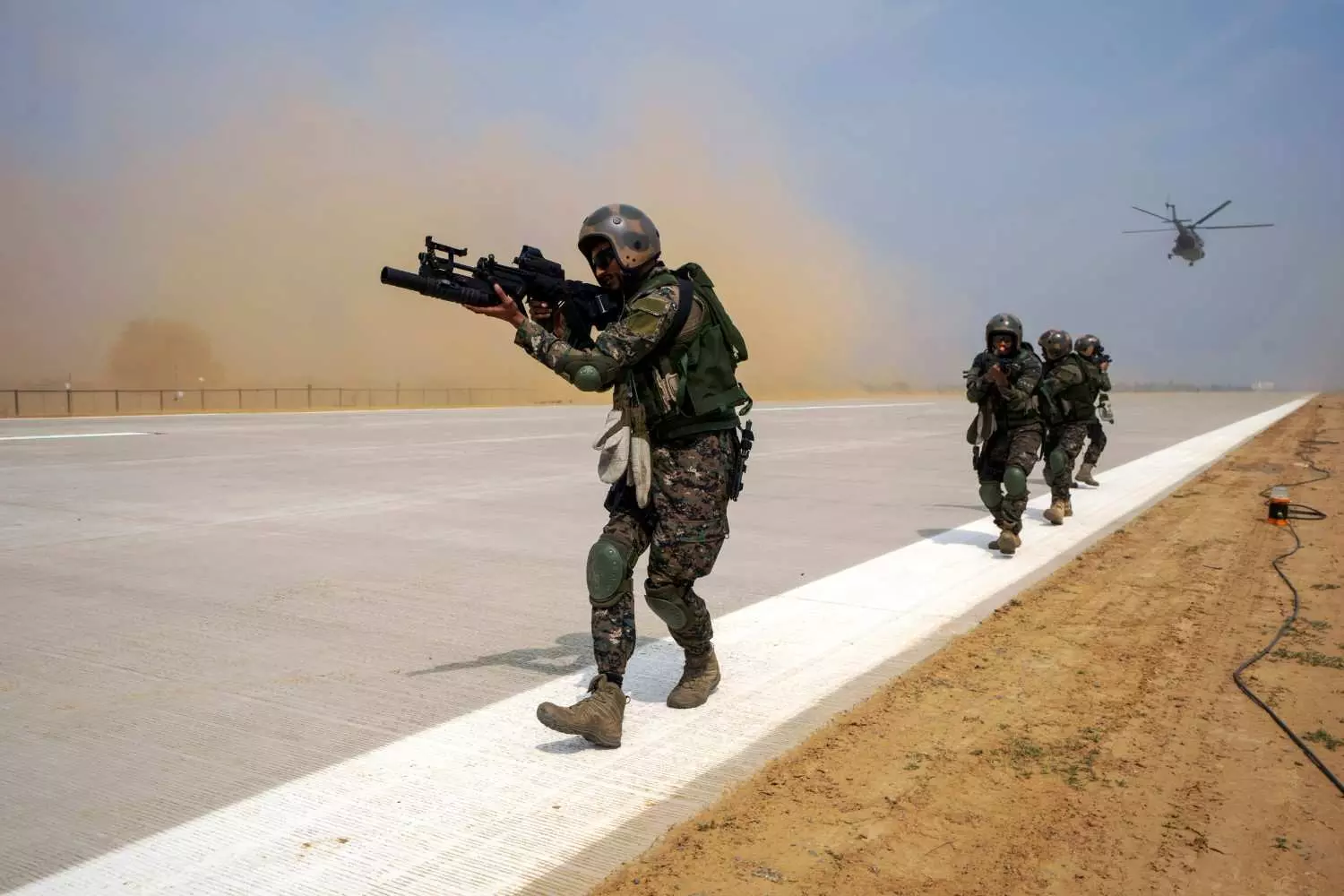
Prahaar recognizes that the next “26/11” style attack won’t be fought on a traditional battlefield, but in crowded city malls, hotels, and hospitals. The policy creates new Rapid Response Task Forces that bridge the gap between local police and the elite National Security Guard (NSG). These units are trained for “Multi-Site Response”—the ability to handle simultaneous attacks in three different parts of a city without the chain of command breaking down.
The “Internal” War: Cyber Radicalization
One of the toughest pillars of Prahaar is the focus on the “Keyboard Terrorist.” The policy treats online propaganda as a “pre-kinetic” act of war. It proposes new laws for digital evidence preservation, making it easier for agencies to prosecute those who run recruitment bots or spread deepfake inflammatory content.
The Friction Points: Privacy and Federalism
If you talk to civil rights lawyers in Delhi today, they’ll tell you Prahaar is a “surveillance nightmare.” There are massive questions about who watches the watchers.
-
Data Privacy: With AI scanning private communications and facial recognition tracking movement, where does “security” end and “privacy” begin?
-
State Rights: In India, “Police” is a state subject. Getting a state like West Bengal or Tamil Nadu to hand over all their local data to a central “Prahaar” server is a political minefield.
The Verdict
Prahaar is an ambitious, perhaps even desperate, attempt to future-proof India. It acknowledges that the old ways of filing paperwork and manual surveillance are dead. The success of this policy won’t be seen in grand speeches, but in the silence—the attacks that don’t happen because a line of code caught a red flag before a trigger was pulled.













Leave a Reply