
Townhall Times, New Delhi
Reporter: Bhavika Kalra
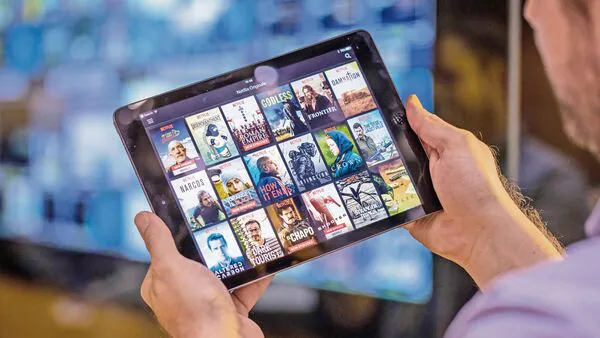
If you walked into the Netflix or Amazon Prime Video offices in Mumbai five years ago, the air was thick with the scent of “Pan-India” Hindi blockbusters. But today, on Monday, February 23, 2026, the vibe has shifted entirely. The boardroom whiteboards aren’t covered in plans for the next big Bollywood actioner; they are covered in casting calls for Malayalam noir, Marathi family satires, and high-budget Telugu space operas.
The “Regional Revolution” in Indian OTT isn’t just a trend anymore—it’s the only way to survive. The latest data shows that for the first time in Indian streaming history, the growth rate of regional-language subscribers has officially overtaken Hindi. As we move through 2026, the streaming wars aren’t being fought on the streets of Bandra; they’re being fought in Coimbatore, Vijayawada, and Nagpur.
The “Tier-2” Goldmine: Why Small Towns Are Driving the Big Budgets
For a long time, the “Big Three”—Netflix, Amazon, and Disney+ Hotstar—viewed regional content as a secondary “dubbing” project. You’d take a Hindi show, slap on some Tamil subtitles, and call it a day. That doesn’t work in 2026.
The 2026 slate reveals something fascinating: the audience in small-town India has “graduated.” They have high-speed data, they have 4K smartphones, and they have zero patience for stories that don’t look like their own lives. When JioCinema (now JioHotstar after the massive merger) reported its 300-million-subscriber milestone earlier this year, the secret wasn’t just cricket; it was the fact that they were offering content in eight different dialects.
The platforms have realized that if you want a person in a small village in West Bengal to pay for a subscription, you can’t just give them a “localized” version of The Crown. You have to give them a gritty, Bengali-language political thriller that feels like it was filmed in their backyard.
The 2026 Slate: More Than Just Crime Thrillers
If 2024 was the year of the “Small-Town Murder Mystery,” 2026 is the year of Genre Explosion. The announcements we’ve seen today cover a wild range of storytelling:
-
Tamil Nadu & Andhra: Moving away from the typical cop-versus-gangster trope, we are seeing “Climate Fiction” and “Cyber-Punk” series rooted in Chennai and Hyderabad.
-
Kerala: The “Malayalam Miracle” continues, but now with massive budgets. We’re seeing supernatural horror and psychological dramas that are designed to compete with South Korean content on the global stage.
-
Punjab & Bengal: The focus has shifted to “Diaspora Dramas”—stories that resonate not just in Ludhiana or Kolkata, but also in Surrey, Brampton, and East London.
The budgets tell the real story. Five years ago, a regional episode was made for a fraction of a Hindi episode. In 2026, that gap has almost vanished. Platforms are spending ₹5 crore to ₹10 crore per episode for flagship Tamil and Telugu shows because they know these series “travel.” A hit Telugu show today is watched just as much in Delhi or New York as it is in Hyderabad.
The Global “Sub-Title” Effect
We used to talk about “The Korean Wave” (Hallyu). In 2026, we’re starting to see the “Indian Regional Wave.” Thanks to AI-driven dubbing and much more accurate subtitle translation, the language barrier has effectively collapsed.
Global audiences—from Latin America to Southeast Asia—are binge-watching Indian regional content. They aren’t looking for “Bollywood”; they are looking for the raw, atmospheric storytelling that regional directors bring to the table. This global demand is what’s allowing platforms to greenlight 2026 projects that were once considered “too niche.”
The Talent Migration: From the Big Screen to the Small Screen
The biggest change is the faces we see on the posters. In the past, OTT was for “struggling actors” or theatre veterans. Today, the biggest superstars in the South are signing multi-year, exclusive deals with streaming giants.
It’s a massive “power-shift.” A top Tamil actor no longer needs a 3,000-screen theatrical release to reach 50 million people. They can do it on a Friday morning via a global app. This has given writers and directors more freedom to experiment. You don’t need a “masala” song or a forced romance if your audience is watching on a phone—you just need a story that keeps them from clicking the “skip” button.
The Dark Side: Saturation and Subscription Fatigue
But let’s be real—it’s not all standing ovations. The 2026 market is getting crowded. There are now so many “original” series coming out every week that the average viewer is feeling “Subscription Fatigue.”
People are starting to cycle their subscriptions—paying for Netflix one month to watch a specific Tamil show, then canceling and moving to Amazon the next. This has forced the giants into a “Content Arms Race.” They are no longer just fighting for your money; they are fighting for your time. If a show doesn’t hook the audience in the first seven minutes, it’s considered a failure. This pressure is leading to a bit of “formulaic” storytelling even in the regional space—too many cliffhangers, too much forced “edge.”
The Bottom Line
As of February 23, 2026, the era of the “Hindi-Centric” OTT market is dead. The future of Indian entertainment is multilingual, hyper-local, and incredibly diverse.
The 2026 slate isn’t just a list of shows; it’s a map of a more confident India—one where a story told in a small Kerala village or a busy Marathi chawl can sit side-by-side with a Hollywood blockbuster and hold its own. For the viewer, it’s a golden age. For the platforms, it’s a high-stakes gamble to see who can tell the “most Indian” story of them all.








Leave a Reply