
Townhall Times, New Delhi
Reporter: Bhavika Kalra
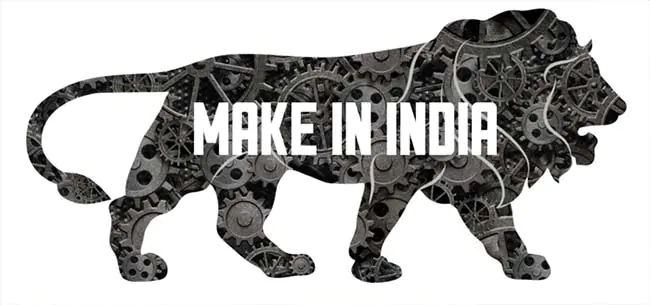
f you want to know where the heart of the “New India” economy is beating, don’t look at the service sector for once. Look at the factory floors. Today, Monday, February 23, 2026, the Ministry of Commerce and Industry dropped a bombshell of a policy update that essentially doubles down on the Make in India dream.
We aren’t just talking about making toys or clothes anymore. The government has just announced a massive new package of incentives specifically for semiconductor fabrication and Electric Vehicle (EV) manufacturing. It’s a bold, expensive, and deeply strategic move to stop being a country that just “consumes” technology and start being the one that “builds” it.
The Silicon Shield: Building a Fortress in the Desert
For decades, India has been at the mercy of global chip shortages. Whether it’s the smartphone in your pocket or the missile systems in the North, everything runs on silicon. And for too long, that silicon has come from a handful of factories in East Asia.
The new incentives are designed to change that. We’re talking about massive capital subsidies—the kind of money that makes global giants like TSMC or Intel take a second look at India. But the real genius in this new plan isn’t just the “fab” plants. It’s the focus on ATMP (Assembly, Testing, Marking, and Packaging). By building the ecosystem for testing and packaging first, India is creating a “pull effect” that will eventually force the big fabrication plants to set up shop here.
The government is also throwing a lifeline to chip design startups. India already has the talent—almost every major chip in the world is designed partly in Bengaluru or Hyderabad—but until now, the intellectual property (IP) belonged to foreign firms. This new move is about keeping the brains and the profits at home.
The EV Revolution: Beyond the Hype
On the other side of the coin is the EV sector. The “Production Linked Incentive” (PLI) scheme was a good start, but today’s announcement goes further. The focus has shifted from just “assembling cars” to the Battery Ecosystem.
If you don’t make the batteries, you don’t control the EV market. The new incentives are laser-focused on Advanced Chemistry Cell (ACC) manufacturing and, more importantly, Lithium-ion recycling. The goal is a “circular economy” where India isn’t just dependent on mining lithium from South America or China but is actually reusing the materials from old batteries.
The government is also pushing for a “localization” of auto components. If a car company wants the top-tier subsidies, they can’t just import a kit from Shanghai and bolt it together in Pune. They have to find local suppliers for the motors, the controllers, and the software. It’s a “tough love” approach that is already making global manufacturers rethink their supply chains.
Why Now? The Geopolitical Hustle
Why is this happening in early 2026? Because the world is de-risking. The “China Plus One” strategy isn’t just a buzzword anymore; it’s a survival tactic for global corporations. India is sensing a once-in-a-century opportunity to grab a piece of the high-tech manufacturing pie.
But it’s not just about global politics; it’s about Jobs. High-tech manufacturing has a massive “multiplier effect.” One job in a semiconductor fab creates five more in logistics, services, and ancillary industries. With millions of young people entering the workforce, the government knows that “IT services” alone won’t be enough. We need “Blue-Collar Tech” jobs.
The Hard Truth: It’s Not All Smooth Sailing
While the industry is cheering, we have to be realistic. Building a semiconductor fab isn’t like building a road. It requires billions of dollars, a massive amount of ultra-pure water, and a 24/7 power supply that doesn’t flicker for even a millisecond.
Then there’s the Skill Gap. We have millions of engineers, but how many of them are trained in sub-nanometer lithography? The new policy mentions “Research & Development grants,” but the real test will be how fast we can upskill our workforce.
The Bottom Line
As of February 23, 2026, India has laid out its cards. We are telling the world: “We have the land, we have the talent, and now, we have the money.”
The semiconductor and EV push marks a fundamental shift in India’s identity. We are moving from being the “World’s Back Office” to becoming the “World’s High-Tech Workshop.” It’s a long, difficult road, but for the first time, the roadmap actually looks complete.














Leave a Reply