
Townhall Times, New Delhi
Reporter: Bhavika Kalra
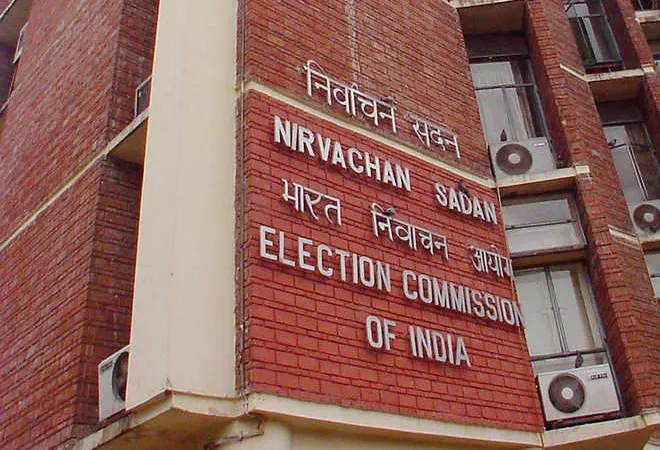
There’s a quiet but intense battle happening inside the Election Commission of India (ECI) headquarters in Delhi right now. While the public is focused on the daily political shouting matches, the “referees” of Indian democracy are trying to rewrite the rulebook for the 2026 election cycle. Today, Monday, February 23, 2026, the ECI wrapped up a critical round of talks that could change how your name shows up on a voter list—and more importantly, how much “dark money” politicians can hide in the digital shadows.
The Commission isn’t just looking for minor tweaks; they are pushing for a total digital overhaul. We are talking about real-time voter rolls and a massive crackdown on the “Wild West” of social media campaigning.
The “Live” Voter Roll: Killing the Ghost Votes
The biggest nightmare for any voter is turning up at the booth only to be told their name has been deleted. It happens in every election, and the ECI is finally trying to kill the problem with a Real-Time Database.
The proposal on the table is to move away from those clunky, once-a-year “revisions” and toward a system that updates automatically. If you move from Gurugram to Bengaluru and update your address on a verified government portal, the ECI wants that to trigger a prompt to move your vote too. Privacy advocates at the meeting were understandably nervous—talking about “state surveillance” and “data profiling”—but the Commission’s argument is simple: this is the only way to get rid of the millions of duplicate entries and “ghost voters” that still haunt the system.
The “Dark Money” Digital Crackdown
If you think campaign spending limits actually mean anything right now, you haven’t been paying attention. Most of the real money isn’t spent on rallies anymore; it’s funneled into Influencer Endorsements and Algorithm Seeding.
In the consultations today, the ECI floated a “Real-Time Expense” rule. The idea is that every single rupee spent on a Facebook ad, a viral WhatsApp blast, or a YouTube “collab” would have to be logged on a digital dashboard within 24 hours. The political parties are, as expected, splitting down the middle on this. The smaller players think it’ll finally level the playing field, while the big political machines are screaming about “over-regulation” and “violation of campaign strategy.”
And then there’s the Deepfake problem. The ECI is looking at mandatory digital watermarking. If a video of a candidate is AI-generated, it has to carry a permanent label. If it doesn’t, the Commission wants the power to pull it down within minutes, not days.
The Migrant Gap: Voting from a Distance
The “Elephant in the room” remains the migrant worker. Millions of Indians live in cities far from their home villages and just can’t afford to travel back for a single day to vote. The ECI is revisiting the Remote Voting Machine (RVM).
It’s a logistical mountain to climb. The Opposition is deathly afraid of hacking or “centralized manipulation,” but the Commission is standing firm: in a digital India, being physically stuck in a village shouldn’t be the only way to exercise a constitutional right. They are looking at pilot projects specifically for internal migrants, possibly as soon as the next set of state polls.
The Bottom Line
As of February 23, 2026, these are still just proposals, but the momentum is undeniable. The ECI wants a cleaner, faster, and more digital process. But as several civil society groups pointed out today, a “smart” election is only fair if the system is transparent to everyone—not just the tech-savvy.
India is trying to build the “World’s Smartest Democracy.” But as with any software update, the bugs can be fatal. The Commission has a massive job ahead of it to prove that “Digital” doesn’t mean “Dangerous.”


Leave a Reply