
Townhall Times, New Delhi
Reporter: Bhavika Kalra
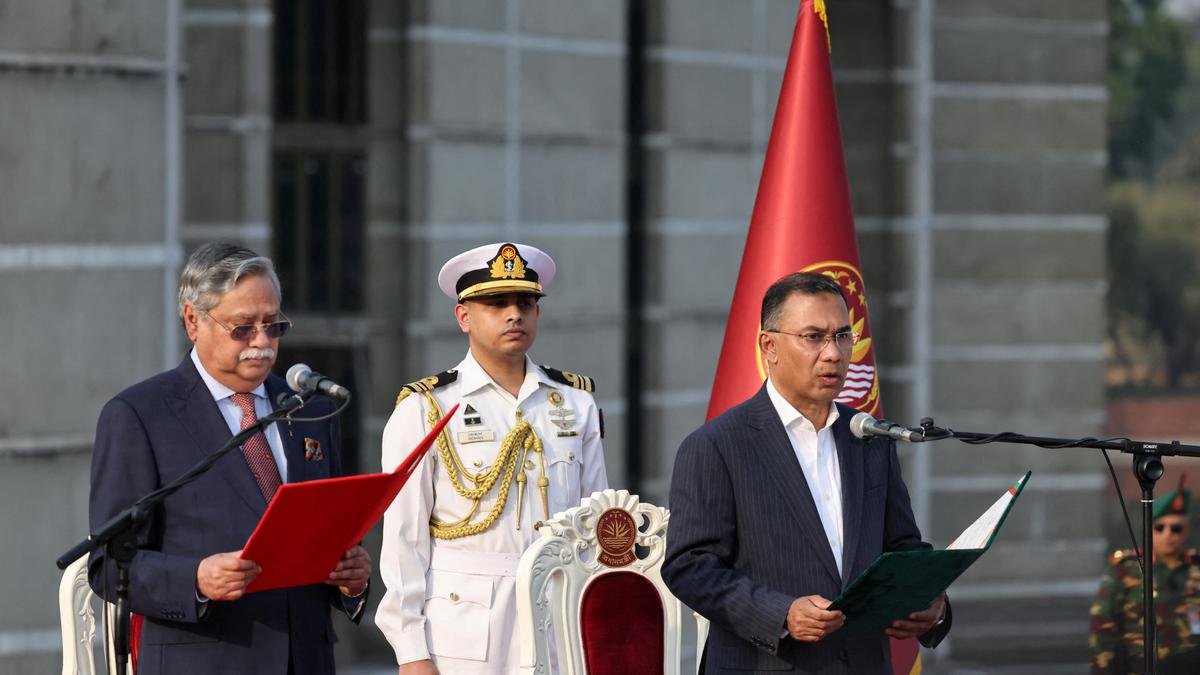
If you want to know how a new government plans to rule in Bangladesh, don’t look at the speeches; look at the military gazettes. Just days after Tarique Rahman was sworn in as Prime Minister on February 17, 2026—officially ending the “Battle of Begums” and the long period of interim rule—he made his first massive power play. On Sunday afternoon, the Army Headquarters issued a series of directives that have effectively redrawn the map of the country’s high command.
This wasn’t just a routine transfer of officers. It was a surgical strike at the top echelons of the military, aimed at aligning the barracks with the new political reality in Dhaka.
The New Power Players
The biggest headline is the appointment of Lieutenant General Muhammad Mainur Rahman as the new Chief of General Staff (CGS). For those not familiar with the military hierarchy, the CGS is essentially the brain of the army. He controls the operations, the intelligence, and the strategic planning. Moving Mainur Rahman into this role—fresh from his stint at the Training and Doctrine Command (ARTDOC)—is a clear sign that the new administration wants a sharp, operationally-focused hand at the wheel. He replaces Lt. Gen. Mizanur Rahman Shamim, who has been ushered into retirement.
Then you have the Principal Staff Officer (PSO) at the Armed Forces Division. This is the bridge between the Prime Minister and the military. Major General Mir Mushfiqur Rahman has been promoted to Lieutenant General and handed this critical job. It’s a massive promotion, and it places someone the administration trusts directly in the room where the most sensitive decisions are made.
Meanwhile, the former PSO, Lt. Gen. S.M. Kamrul Hasan, isn’t just being moved; he’s being moved out. He’s been transferred to the Ministry of Foreign Affairs to be sent abroad as an ambassador. In the world of Dhaka politics, sending a high-ranking general to a diplomatic post is the classic way of saying, “Thank you for your service, now please stay far away from the center of power.”
Cleaning Up the Intelligence Channels
Perhaps the most telling part of this reshuffle is what happened at the DGFI (Directorate General of Forces Intelligence). This is the agency that sees and hears everything in Bangladesh. Brigadier General Kaiser Rashid Chowdhury has been catapulted to Major General and named the new Director General.
He’s replacing Major General Mohammad Jahangir Alam, who—much like the former PSO—is being sidelined into a diplomatic role at the Foreign Ministry. When a new government changes the head of military intelligence within days of taking office, it’s because they want to ensure the “eyes” of the state are reporting exactly what they want to see.
The “India Factor” and Border Command
One specific move that caught everyone’s eye involves Brigadier General Md. Hafizur Rahman. He’s been serving as the Defence Adviser at the High Commission in New Delhi for quite a while. He’s now been promoted to Major General and called back home to lead the 55 Infantry Division in Jashore.
Jashore is a critical frontier command on the border with India. Bringing back a man who knows the inner workings of Delhi’s security establishment and putting him in charge of a frontline division is a calculated move. It’s a signal to the neighbors that while Bangladesh wants stability, it is also recalibrating its own border interests with a fresh set of eyes.
Why Now? The Big Picture
Tarique Rahman’s return from exile and his landslide victory (212 seats out of 300) have given him a massive mandate, but a mandate is nothing without control over the state’s security apparatus. The 18 months of the Muhammad Yunus-led interim government had created a different kind of “balance” within the military. Many of the officers who rose to prominence during that time are now being shuffled into administrative or diplomatic roles to make room for a “new guard” that is more in tune with the BNP’s vision.
The critics will call this “political cleansing,” while the supporters will call it “institutional modernization.” The truth is likely somewhere in the middle. Tarique Rahman knows that to fix the “fragile economy and weakened institutions” he talked about in his first address, he needs an army that is fully unified behind his office.
The Road Ahead
As of Monday, February 23, 2026, the mood in Dhaka is one of cautious observation. There hasn’t been any unrest in the streets, and the military remains professional and operational. But the message from the South Plaza of the Jatiya Sangsad is loud and clear: The era of transition is over, and the new administration is now firmly in command of the barracks.
For Tarique Rahman, the next 100 days will be about proving that these shifts in the high command actually lead to better security and law and order. For the generals, it’s about navigating a new political landscape where the old “battle of begums” has been replaced by a single, assertive center of power.







Leave a Reply