
Townhall Times, New Delhi
Reporter: Bhavika Kalra
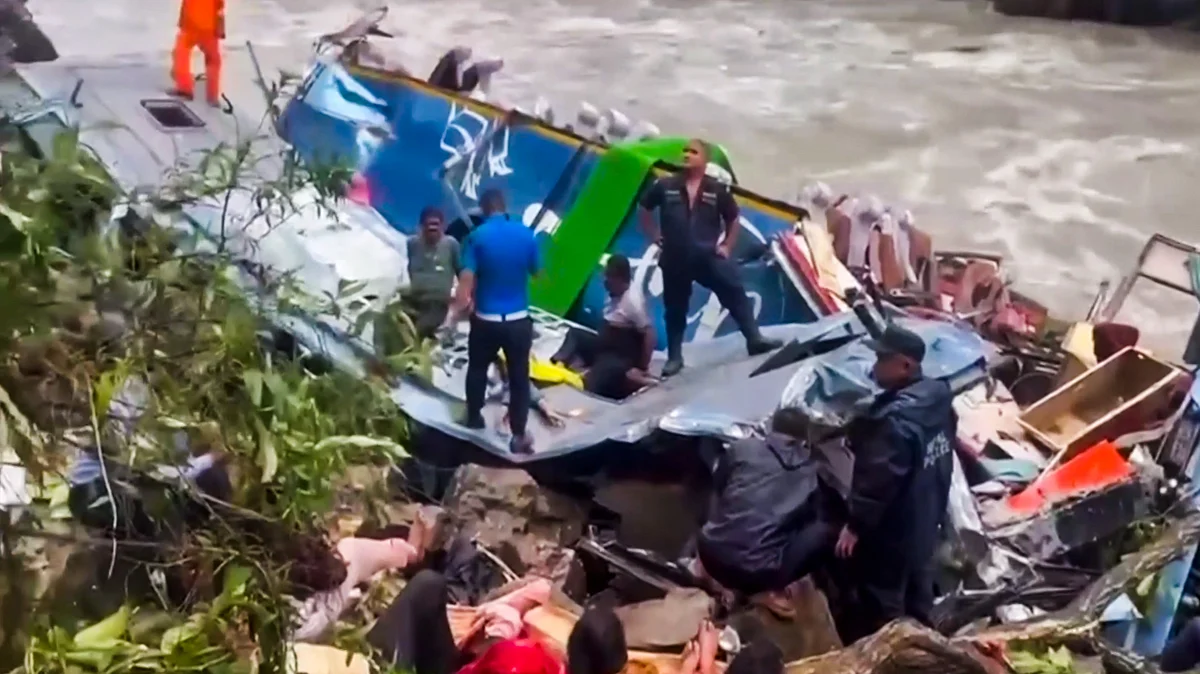
It’s a story we’ve heard far too many times, but the horror never gets any easier to stomach. On Sunday, a crowded passenger bus was navigating the treacherous twists of the Dhading district when something went horribly wrong. In a split second, the vehicle veered off the road and took a vertical dive into the Trishuli River. By the time the sun set, the count was 18 dead, and the river had once again lived up to its reputation as one of Nepal’s deadliest corridors.
Chaos on the Riverbank
The crash happened so fast that most passengers didn’t even realize they were falling until the water started rushing through the shattered windows. Eyewitnesses near the site described a sickening sound—the screech of tires followed by a heavy splash that echoed through the valley. Local villagers didn’t wait for the sirens; they scrambled down the steep embankment with ropes and whatever they could find to pull people out of the freezing current.
When the Nepal Police and Army divers finally arrived, the scene was pure chaos. The river is notoriously fast this time of year, and trying to reach a submerged bus while the current is pulling at everything is a suicide mission. Divers had to be tethered just to stay near the wreckage. As cranes eventually hauled the mangled metal out of the water, the reality hit home: 18 people hadn’t made it.
The ICU Battle and Missing Faces
Right now, the focus has shifted to the hospitals. Several survivors are in critical condition, fighting through broken bones and internal injuries. But for some families, the nightmare isn’t over yet—search teams are still combing the downstream banks for passengers who might have been swept away by the current.
The government, as usual, has promised a “high-level inquiry.” They’re looking at the usual suspects: brake failure, a tired driver, or maybe the bus was just carrying too much weight for those narrow mountain bends. But if you ask anyone who drives these roads daily, they’ll tell you the real truth. It’s the infrastructure.
Why Does This Keep Happening?
Let’s be honest calling this a “road accident” feels like an understatement. These aren’t just roads; they are narrow strips of asphalt carved into the sides of cliffs with zero margin for error.
-
The Guardrail Myth: In most places, there isn’t a single piece of steel between a bus full of people and a 200-foot drop.
-
Overworked Drivers: These long-haul trips are grueling. Fatigue is a silent killer on the Prithvi Highway.
-
Mechanical Neglect: Buses are often run until they literally fall apart. A steering snap on a flat road is a headache; a steering snap in Dhading is a massacre.
The Bottom Line
Nepal’s mountains are beautiful, but for those traveling through them, they are becoming a gamble. The government has announced compensation for the families, but money doesn’t bring back the 18 people who were just trying to get home or go to work. Today, February 23, 2026, the community in Dhading is silent, mourning a loss that many feel was entirely preventable.
Until there are real barriers on those riverbanks and actual enforcement of safety rules, the Trishuli is going to keep taking its toll. How many more 18-person tragedies do we need before the “inquiry committees” actually change something?




Leave a Reply