
Townhall Times, New Delhi
Reporter: Bhavika Kalra
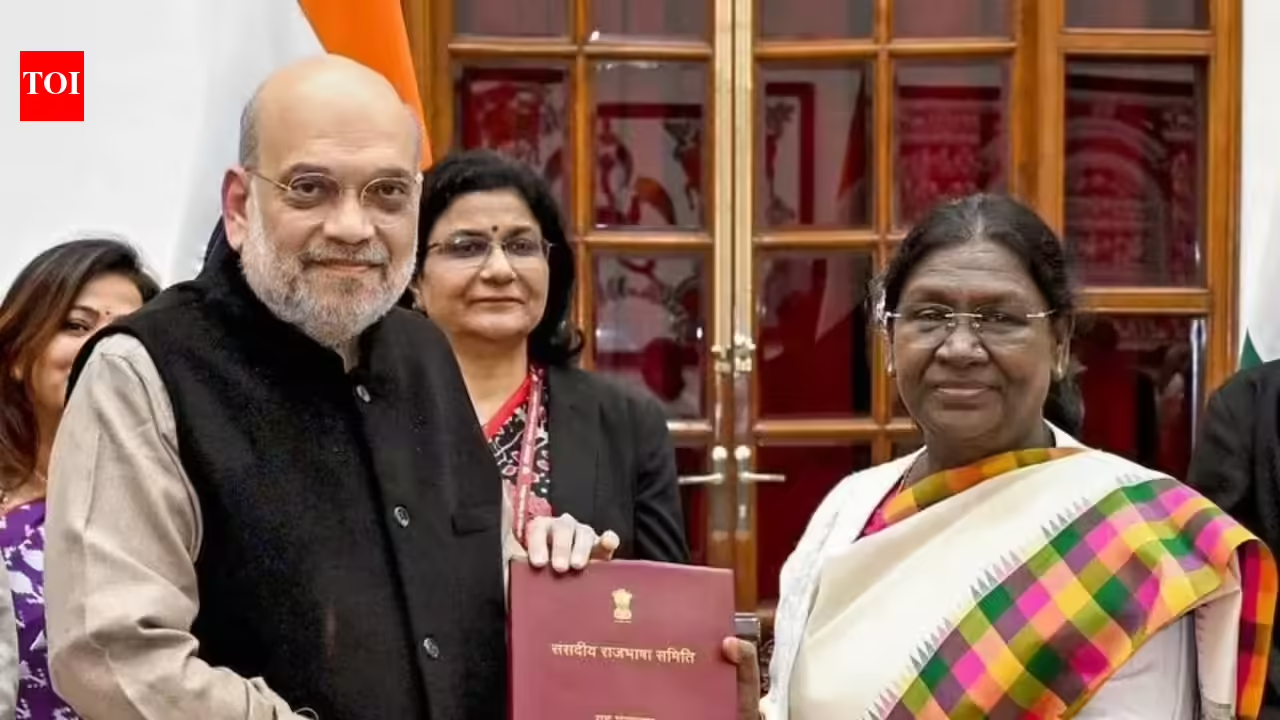
Mahatma Mandir in Gandhinagar isn’t just hosting a meeting today; it’s hosting a blueprint for India’s rural economy. Union Minister of Cooperation Amit Shah has convened the “Manthan Baithak”—a high-stakes summit with Cooperation Ministers from every State and UT. The mission? To move past the “archaic” cooperative era and launch a high-tech, ₹3.47 lakh crore credit-and-storage ecosystem that rivals private enterprise.
The “Two Lakh” Target: Transforming the Village Backbone
The most aggressive goal discussed today is the establishment of 200,000 new multi-purpose Primary Agricultural Credit Societies (PACS).
-
The “Swiss Knife” Strategy: No longer just loan-givers, these PACS are being rebranded as “Common Service Centers” (CSCs).
-
The Reality: By 2026, a village PACS will be a one-stop-shop—it will give you a crop loan, store your grain in a modern warehouse, sell you high-quality seeds from the newly formed BBSSL, and even act as a local “Jan Aushadhi Kendra” for cheap medicines.
Grain Storage: Ending the “Mandate of Waste”
India has long suffered from a “harvest-to-waste” crisis. Shah’s summit today reviewed the progress of the World’s Largest Grain Storage Plan.
-
The Network: The plan isn’t to build massive, distant silos but to create a hyper-local network of warehouses owned by the cooperatives themselves.
-
The Impact: This allows farmers to wait out price drops. Instead of “distress selling” at harvest, they store the grain at the local PACS, get a loan against it, and sell when the market peaks.
Dairy 2.0 and the “Amul AI” Push
Following the recent launch of Amul AI earlier this month, the summit focused on scaling this digital edge.
-
Smart Dairies: We are seeing a push for automated milk testing and blockchain-based payments that go directly into the bank accounts of women farmers—who currently make up a massive chunk of the dairy workforce.
-
White Revolution 2.0: The target is simple—zero imports. By excluding dairy from international free trade agreements, the government is shielding over 10 crore small farmers from global price wars.
The Cooperative Bank “Cleanup”
Cooperative banks have historically been seen as “politicized and leaky.” Today’s reforms are meant to fix that reputation.
-
RBI Oversight: Under the new Banking Act, these banks are being brought under stricter RBI scrutiny.
-
Professionalization: Shah was blunt recruitment must move from “nepotism” to “merit.” The summit outlined a roadmap for the computerization of 63,000 PACS, ensuring every rupee is tracked in real-time on the National Cooperative Database.
New Players: Exports, Organics, and Seeds
The summit also tracked the birth of three national-level “super-cooperatives”:
-
NCEL (Exports): Helping village farmers sell their produce in Dubai or London.
-
NCOL (Organics): Certifying and branding India’s organic produce.
-
BBSSL (Seeds): Ensuring the farmer gets seeds that aren’t just cheap, but high-yield and climate-resilient.
The Bottom Line
The “Sahkar Se Samriddhi” vision isn’t about charity; it’s about capitalism for the community. As Amit Shah wraps up the session in Gandhinagar, the message to the States is clear: modernize your cooperative laws by the centenary of independence (2047), or get left behind in the new rural economy.









Leave a Reply