
Townhall Times, New Delhi
Reporter: Bhavika Kalra
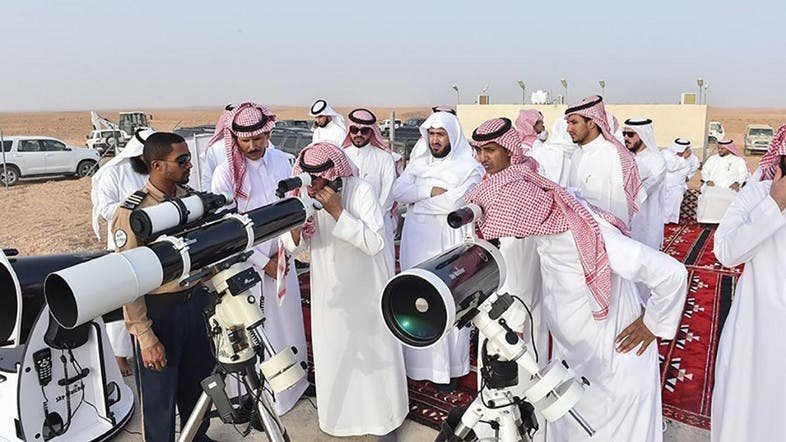
The wait is almost over. As the sun dips below the horizon this Tuesday evening across the Arabian Peninsula, nearly two billion people are holding their collective breath. The Saudi Supreme Court has officially signaled the start of the “Hilal” hunt—the search for the slender crescent moon that dictates the Islamic calendar.
If the moon is spotted tonight, the holy month of Ramadan 1447 AH kicks off tomorrow, Wednesday, February 18, 2026.
The “High-Tech” Tradition
There’s a unique tension that hangs over the Kingdom every year during this time. Even in 2026, where we can track a satellite to within an inch of its orbit, the start of Ramadan still hinges on the oldest “technology” known to man: the human eye.
The Kingdom isn’t just relying on lucky guesses, though. A massive network of specialized observatories in locations like Sudair and Tumair—chosen for their crystal-clear desert air—are currently manned by veteran astronomers. These experts use massive telescopes, but the tradition dictates that a manual sighting by a reliable witness is the final “seal” of approval needed by the Supreme Court. It’s a moment where a 1,400-year-old ritual shakes hands with 21st-century optics.
The 2026 Shift: A Winter Ramadan
One of the most talked-about aspects of Ramadan 1447 is the weather. Because the Islamic lunar calendar is roughly 11 days shorter than the solar year, Ramadan “travels” through the seasons.
-
The Climate Relief: For the first time in years, the fast is falling in the heart of February. For those in the Middle East and North India, this is a massive win. We’ve moved away from the grueling 15-hour fasts in the 45°C heat of July.
-
The Physical Toll: A late-winter Ramadan means shorter days and cooler temperatures. This makes the physical strain of Sawm (fasting) significantly easier, particularly for the elderly and those working manual jobs outdoors.
The “Global Domino” Effect
Why does a court decision in Riyadh make headlines in New York, London, and Jakarta? As the custodian of the Two Holy Mosques, Saudi Arabia’s announcement acts as a religious “green light” for a massive portion of the global Muslim community.
While countries like India, Pakistan, and Indonesia—which have their own robust moon-sighting committees—often start a day later based on their local horizons, the Saudi announcement sets the global machinery in motion. Within seconds of the official tweet, flight schedules are adjusted, work hours are trimmed, and the massive Ramadan retail engine hums to life.
Living the Month: Beyond the Fast
For the uninitiated, the start of Ramadan isn’t just about “not eating.” It’s a total systemic reboot. Starting tonight:
-
The Night Shift: Life moves to the nighttime. After the Iftar (sunset meal), the Taraweeh prayers begin—special congregational prayers that can last late into the night.
-
The Suhoor Ritual: Families will wake up in the dead of night for Suhoor, the pre-dawn meal that fuels them for the day ahead.
-
The Spirit of Zakat: Charity isn’t just encouraged; it’s the centerpiece. From community kitchens in New Delhi to massive donation drives in Dubai, the focus is on those less fortunate.
The Final Word
As of this moment, the moon-sighting committees are in position. If the clouds stay away and that silver sliver appears, the world will wake up to a very different rhythm tomorrow. It’s a month of discipline, a month of community, and most importantly, a month of spiritual “re-centering” in an increasingly chaotic world.









Leave a Reply